Physical Address
Islamabad, Pakistan
Physical Address
Islamabad, Pakistan

By Global Dispatches Editorial Team
Published October 2026
What starts as an idyllic Friday afternoon in a coastal paradise can change in a fraction of a second.
When a violent magnitude 7.7 earthquake struck Panama—one of the strongest tremors the region has felt in years—it left behind damaged infrastructure, collapsed homes, and hundreds of displaced residents scrambling for safety.
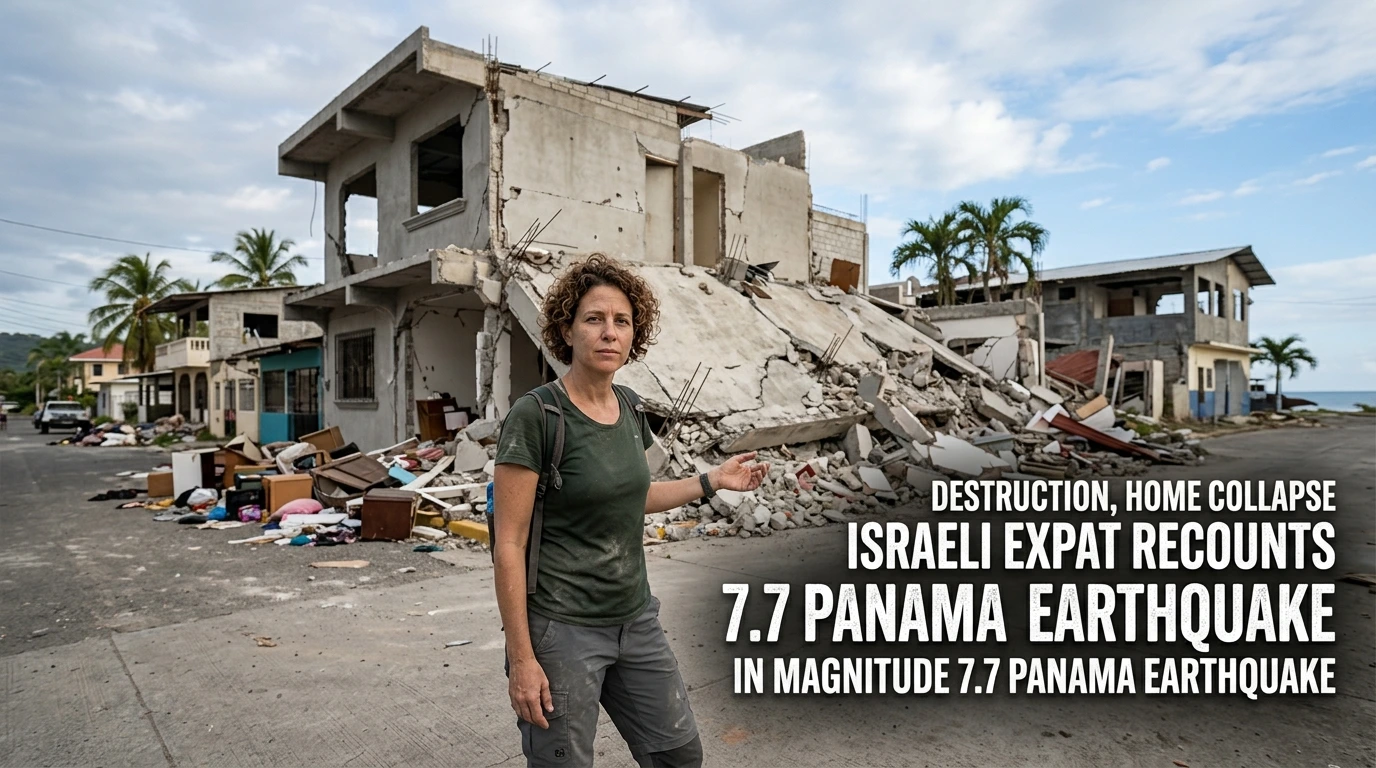
Among those picking up the pieces is Nurit Goren Elfant, an Israeli expat living in southern Panama, who spoke with N12 News about surviving the terrifying ordeal, watching her home collapse, and finding light amidst widespread destruction.
The earthquake hit just minutes before 1:00 PM. For Nurit and her family, what began as a routine day transformed into complete chaos as the ground beneath them shifted violently.
“The ground shook at a level you don’t see in movies, and for 13 consecutive hours, there were tremors every few minutes,” Elfant recalled. “It was something you can’t even imagine.”
Nurit and her family count themselves extraordinarily fortunate on one crucial point: they were outside when the main quake struck. Seconds later, their house—along with several surrounding structures—completely collapsed.
The epicenter of the quake sent shockwaves throughout southern Panama, cutting off electricity, tap water, and cellular internet to coastal hubs like Playa Venao, an area known for its vibrant community of Israeli expats and international travelers.
With standard telecommunications knocked out completely, those with access to satellite internet became vital lifelines to the outside world.
Making matters worse, initial tsunami warnings triggered widespread panic, sending over 200 locals and tourists fleeing toward higher ground.
In times of immense disaster, resourcefulness often becomes the greatest asset.
Prior to the earthquake, Elfant’s family had converted two buses into alternative living spaces. Because buses are built on heavy chassis that can absorb seismic shocks better than fixed structures, the converted vehicles survived the initial quake intact.
Recognizing that neighbors and fellow expats had nowhere to go, Nurit opened up her makeshift bus homes to shelter displaced community members.
“Because a bus can absorb shocks, we sleep in it and let other families live with us,” she shared.
While the Panamanian government and local emergency crews work to restore power, clear landslides, and reconnect isolated towns, the spirit of community among the survivors remains strong.
For Nurit and many other expats in Playa Venao, rebuilding will be a long process. But amidst shattered walls and lost belongings, acts of neighborly support and shared shelter offer a reminder of human resilience in the face of nature’s raw power.
Did you or someone you know experience the Panama earthquake? Share your thoughts or stories of community support in the comments below.