Physical Address
Islamabad, Pakistan
Physical Address
Islamabad, Pakistan

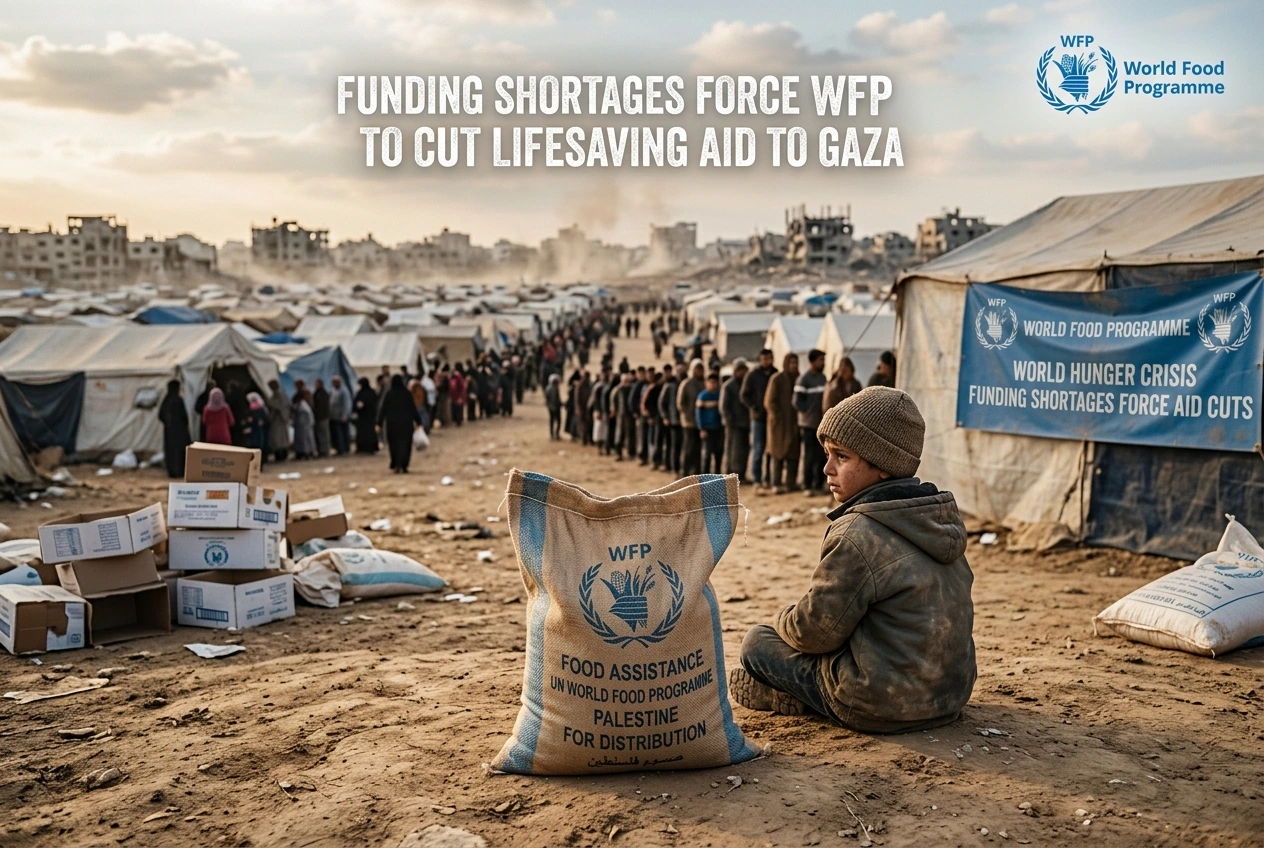
For millions of displaced families in the Gaza Strip, humanitarian food assistance has not just been a safety net—it has been their sole lifeline. Yet today, that already fragile lifeline is being stretched to a breaking point.
The United Nations World Food Programme (WFP) announced a severe reduction in its food assistance operations across Gaza due to acute global funding shortfalls.With resources plummeting, the agency has been forced to slash its support by nearly one-third, leaving half a million people without critical monthly aid as winter approaches.
The scale of the cutbacks reveals a stark reality for families facing extreme food insecurity:
While WFP is attempting to safeguard core nutrition programs—such as supporting bakeries that meet a third of Gaza’s bread needs and delivering specialized food to pregnant women and young children—the overall impact of these cuts threatens to undo fragile, hard-won gains in stabilizing malnutrition levels.
The aid reductions arrive at a critical moment.More than 80 percent of Gaza’s workforce remains unemployed, local markets are severely disrupted, and basic infrastructure—from clean water to sanitation—is largely compromised. With winter weather approaching, the loss of basic sustenance exposes displaced families living in temporary shelters to severe health risks.
“We spent a whole week without bread. This bag of flour means everything to me. It means life,” shared one displaced woman in Gaza.For her and hundreds of thousands like her, reduced assistance means choosing between skipping meals or taking away rations from family members so children can eat.
The operational pinch is not isolated to Gaza alone. In the West Bank, funding constraints previously forced WFP to slash its aid beneficiaries in half—from 400,000 down to 200,000 people—highlighting a broader financial strain across Palestinian humanitarian relief efforts.
The WFP received less than half the funding for its operations in Palestine compared to previous years.Global humanitarian budgets are under severe strain due to donor fatigue, geopolitical shifts, and competing global crises, leaving emergency response agencies severely underfunded.
To sustain basic operations through the coming months (October to March), the agency urgently requires US $450 million. Without immediate financial commitments from the international community, additional cuts to essential food programs, engineering support, and school snack distributions will become unavoidable.
| Operational Area | Previous Scale | New Reduced Scale |
| Monthly Food Beneficiaries | 1.6 Million People | 1.1 Million People |
| Daily Hot Meals | 250,000 Meals | 150,000 Meals |
| Family Food Parcels | 2 Parcels per Family | 1 Parcel per Family |
| Funding Deficit | — | $450 Million Needed |
Humanitarian aid should never depend on a fluctuating budget sheet when millions of lives are on the line. While logistical barriers often dominate headlines regarding aid distribution, the reality on the ground is now equally dictated by funding deficits.
To prevent a sharp rebound in famine risks and acute hunger, international donors, partner governments, and global institutions must step forward to bridge the $450 million gap. Ensuring that food, clean water, and basic dignity reach displaced families is a shared global obligation—one that cannot afford to be rationed away.