Physical Address
Islamabad, Pakistan
Physical Address
Islamabad, Pakistan

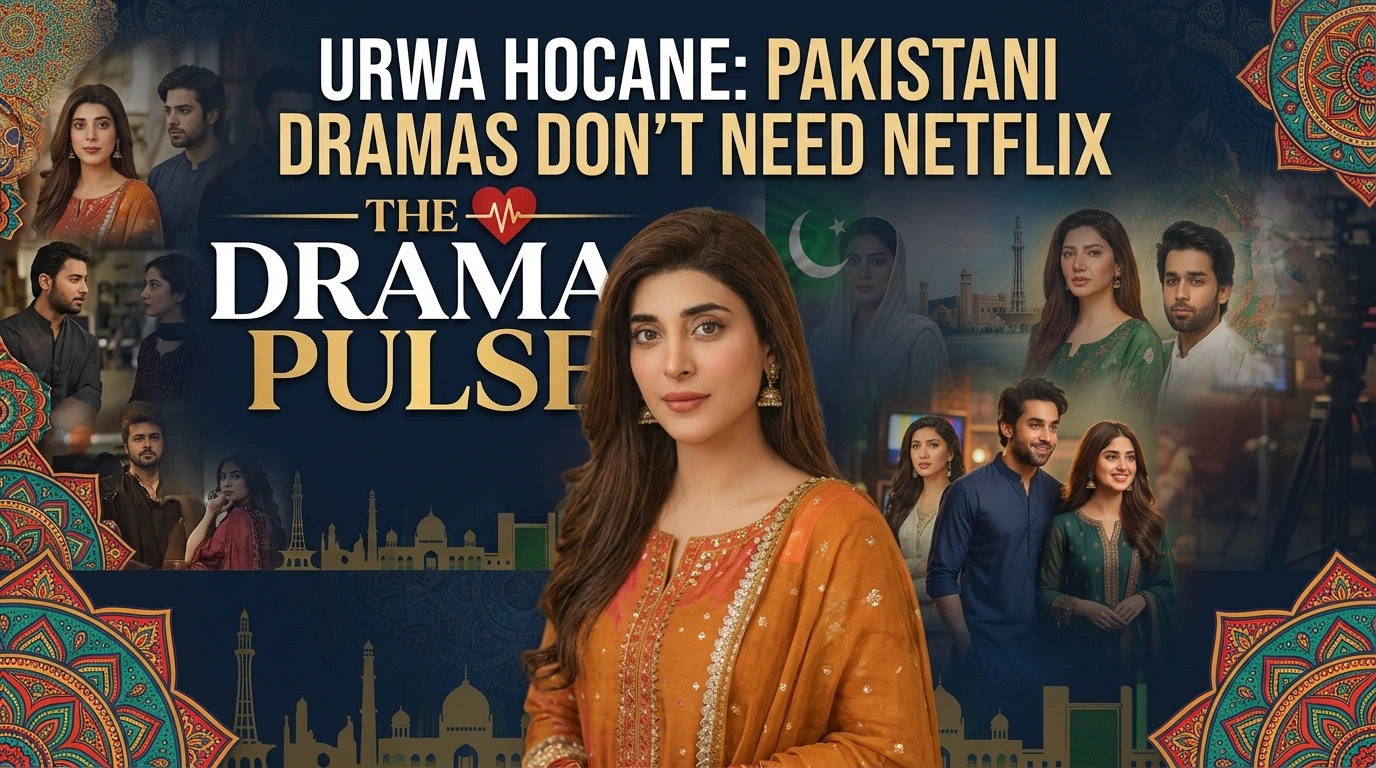
For years, whenever a Pakistani drama hits high emotional notes, boasts stunning cinematography, or delivers a gripping storyline, critics and viewers alike pull out a familiar compliment: “This is Netflix-quality!”
However, celebrated actor and producer Urwa Hocane is calling time on that comparison. Appearing in an insightful conversation on Gloss Etc with Maliha Rehman, the Udaari and Aap Ki Izzat star voiced a refreshing perspective that resonated across the entertainment industry: Pakistani television doesn’t need to benchmark itself against global streaming giants like Netflix.
“I find that [comparison] so lame. We’re doing better than that… The stories that we’re telling and the quality that we’re showing, we don’t need no Netflix, and why are we comparing ourselves to that anyway?” — Urwa Hocane
At the heart of Urwa’s argument is a fundamental truth about what makes Pakistani television so widely watched across the globe. While Western productions often rely heavily on high-budget visual effects, glitz, and extravagant scale, Pakistani television excels in grounded, character-driven narratives.
Urwa highlighted that local creators prioritise narrative depth over sheer glamour:
Pointing to her recent project, Aap Ki Izzat, Hocane illustrated how raw narrative power and authentic character arcs captivate millions without needing flashiness or massive budgets.
It’s easy to assume that inclusion in a global subscription catalog is the only path to international validation. Yet, Pakistani drama content has organically built an enormous global audience on its own terms.
Rather than waiting for international platforms to grant validation, Pakistani dramas have cultivated a massive, loyal diaspora and international fanbase entirely on their own merit.
Calling local productions “Netflix-quality” often stems from a subconscious belief that Western streaming benchmarks define excellence. Hocane’s remarks challenge creators, critics, and audiences to shed that validation complex.
As international platforms increasingly navigate creative saturation, Pakistani television’s strength remains its commitment to original storytelling, societal nuance, and strong ensemble performances.
Urwa Hocane’s comments aren’t an rejection of global outreach, but rather a call for artistic self-worth.
Pakistani dramas have earned their place as a cultural powerhouse because of their distinct identity, deep emotional roots, and narrative sincerity. By focusing on narrative richness over superficial trends, the Pakistani television industry proves day in and day out that great storytelling doesn’t need a platform’s stamp of approval to shine globally.