Physical Address
Islamabad, Pakistan
Physical Address
Islamabad, Pakistan

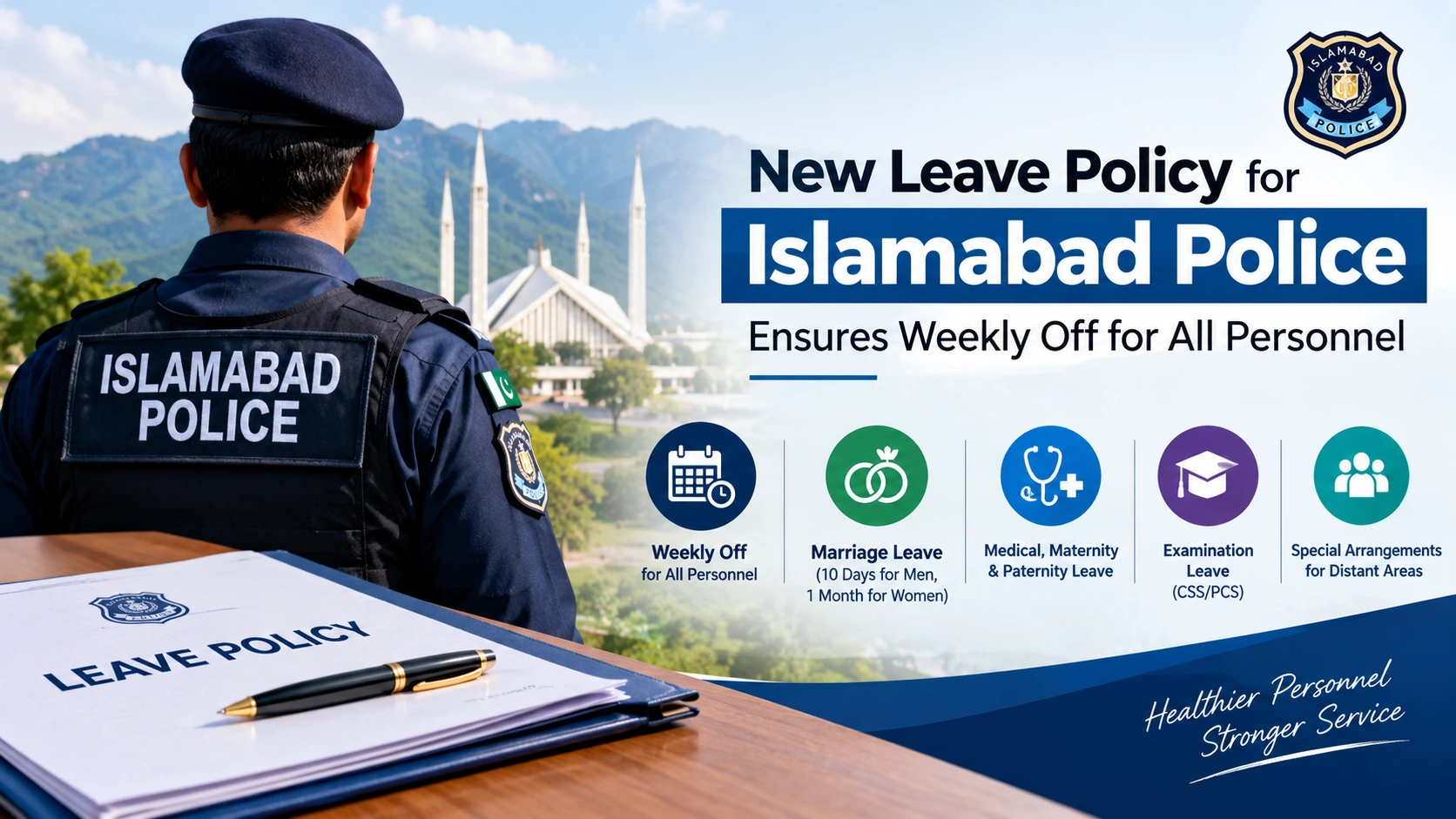
Islamabad Police has introduced a new leave policy aimed at improving the welfare of police officers and officials by ensuring that every member of the force receives at least one day of weekly rest. The policy, issued on October 23, 2026, also revises leave entitlements and clarifies the authority of senior officers to approve leave applications.
According to a report published by Dawn on October 25, the new rules replace the previous leave instructions, including the policy introduced in 2022. The initiative is intended to make the leave process more accessible while balancing the personal needs of police personnel with the operational requirements of the department.
One of the most significant changes is the introduction of a mandatory weekly day off for all Islamabad Police officers and officials. The weekly rest day will be separate from regular leave entitlements, meaning it will not be deducted from an employee’s available leave balance.
The change is particularly important for police personnel who work long hours and face demanding responsibilities in maintaining law and order, managing traffic, protecting public places and responding to emergencies.
Regular rest can help employees manage fatigue, spend time with their families and maintain their physical and mental well-being. It may also contribute to better performance and greater efficiency in public service.
The new policy also establishes specific provisions for marriage leave. Male police employees will ordinarily be entitled to 10 days of leave for marriage, while female personnel may receive one month of leave, subject to approval by the competent authority.
These provisions give employees a defined period to manage personal and family commitments while ensuring that leave requests are processed under established departmental rules.
Police officers and officials posted away from their home districts have also been given alternative rest arrangements.
According to the policy, personnel belonging to remote districts of Sindh, Balochistan and Khyber Pakhtunkhwa, as well as Chitral, Gilgit-Baltistan and the former Federally Administered Tribal Areas (FATA), may choose between different rest schedules.
They can opt for one day of weekly rest, seven days of rest after every 45 days of duty, or 14 days of rest after every 90 days of duty.
These options are particularly relevant for personnel who must travel long distances to visit their families. The arrangements may help them manage travel time and family responsibilities more effectively.
The revised policy also introduces limits on the number of personnel who can take certain types of leave simultaneously. No more than 10 per cent of a unit’s personnel may take casual leave at one time, while earned leave and leave for travel outside Pakistan are subject to a combined limit of 3 per cent of the unit’s strength.
These restrictions are intended to maintain staffing levels and prevent disruptions to police operations.
The policy also covers medical, maternity and paternity leave, with approval powers assigned according to the ranks of the relevant officers. This framework is designed to make the leave process clearer and establish responsibility for approving applications.
The new rules also provide opportunities for police personnel pursuing further education or career advancement.
Eligible employees appearing in Central Superior Services (CSS) or Provincial Civil Services (PCS) examinations may receive up to 20 days of leave. Personnel attending interviews may be granted up to 15 days, subject to approval.
These provisions recognise that police employees may pursue professional development and competitive examinations alongside their official duties.
Another important feature of the policy is the delegation of leave-sanctioning powers to officers at different levels. This approach is intended to clarify who can approve applications and help personnel navigate the administrative process.
However, the policy makes it clear that leave cannot be claimed as an automatic right. The competent authority may refuse or cancel approved leave when departmental interests or urgent official requirements make it necessary.
This condition allows the department to maintain operational readiness, particularly during periods of heightened security, public events or emergencies.
The introduction of the new leave policy represents a significant step towards improving working conditions within Islamabad Police. By establishing a weekly rest day and defining different leave entitlements, the department has acknowledged the importance of balancing professional responsibilities with employees’ personal needs.
The success of the policy will depend on its consistent implementation across units and ranks. Fair approval procedures, effective staffing arrangements and transparent administration will be essential to ensure that eligible personnel receive the benefits provided under the new rules.
Islamabad Police’s new leave policy introduces important changes, including mandatory weekly rest, revised marriage leave, special arrangements for personnel from distant districts and clearer rules for medical and examination leave.
While operational requirements remain a priority, the policy provides a framework for addressing the welfare needs of police employees. If implemented effectively, it could improve staff morale, support family life and help create a more balanced and efficient working environment for the capital’s police force.