Physical Address
Islamabad, Pakistan
Physical Address
Islamabad, Pakistan

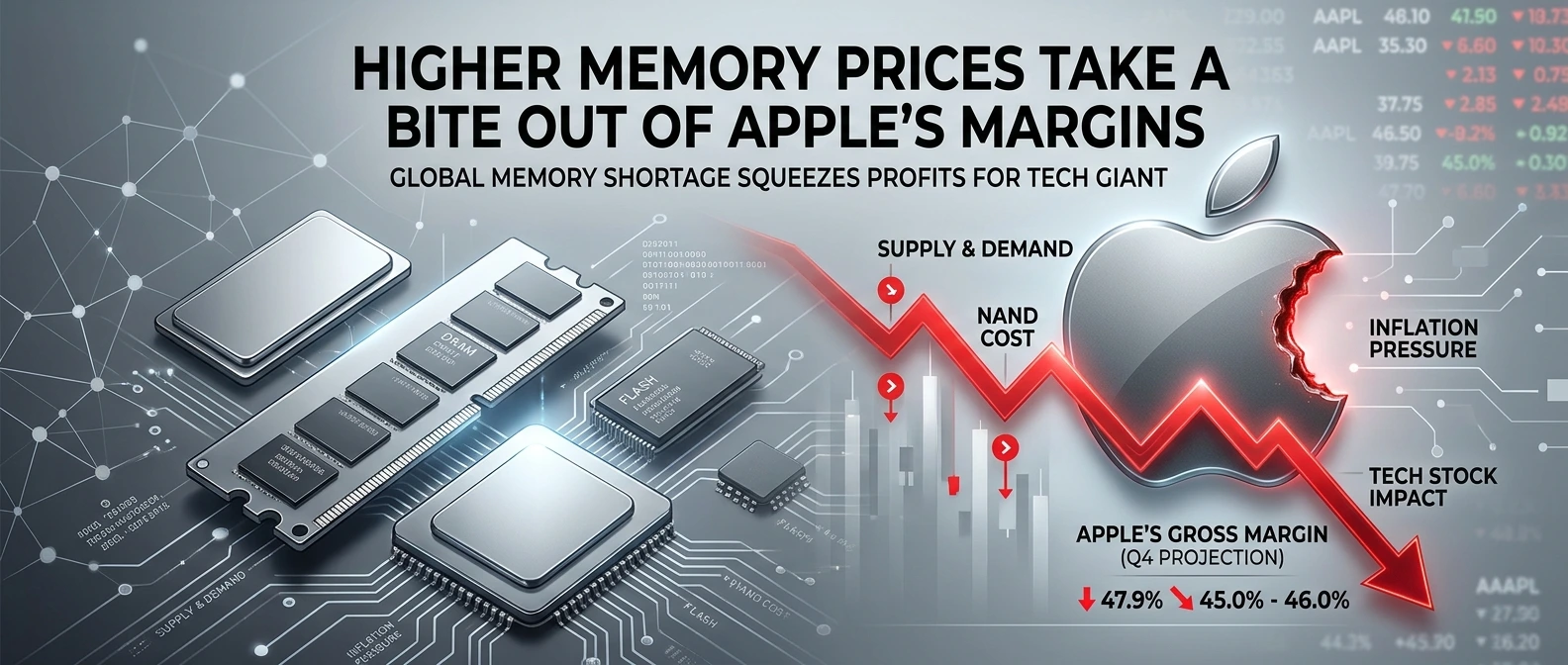
Even the world’s most valuable technology titans aren’t immune to the cyclical turbulence of the hardware supply chain.
Apple recently delivered a sobering reality check to Wall Street. Despite forecasting a blockbuster holiday quarter driven by strong hardware demand, the tech giant issued a margin outlook that caught investors off guard. The culprit? Unprecedented memory and storage chip costs that are steadily eating away at the company’s legendary profitability.
Apple’s latest financial guidance projects a gross margin of 45% to 46% for the crucial December quarter. While a 45%+ gross margin is the envy of nearly the entire consumer electronics industry, it represents a notable cooling down from the 47.9% gross margin posted just a quarter prior.
Unsurprisingly, Wall Street reacted swiftly, with Apple’s stock dipping following the guidance. The market is confronting a rare admission from Cupertino: soaring component costs and heavy investments—including the ongoing rollout and infrastructure ramp-up for the new AI-powered Siri—are putting immense pressure on the bottom line.
The global memory market is caught in a severe supply-and-demand mismatch. As artificial intelligence infrastructure dominates semiconductor fabrication plants worldwide, traditional consumer-grade RAM and flash storage supplies have tightened dramatically.
Leadership noted that these memory prices are at “unprecedented” levels. Unlike previous component crunches that eased relatively quickly, this persistent shortage is expected to keep pushing component prices upward well beyond the current quarter.
Apple has historically relied on its immense supply chain leverage to negotiate rock-bottom prices for components like DRAM and NAND flash. However, when an entire industry faces a structural deficit, even Apple’s massive purchasing power—reflected in ballooning purchase obligations topping $33 billion—hits a brick wall.
The rise in component costs leaves Apple walking a tightrope between two uncomfortable choices:
While CFO Kevan Parekh noted that Apple is attempting to offset these spikes by finding savings in non-memory components, the company has already been forced to make hard pricing adjustments across several product lines over the past year.
Apple’s margin compression serves as a bellwether for the broader tech sector. As long as high-bandwidth memory and advanced storage allocations are heavily contested by AI data center demands, consumer hardware margins will remain under siege.
For consumers, it means that the era of getting more storage for your money year-over-year might be taking a temporary pause. For Apple, the challenge will be proving that its ecosystem pull and new AI features can drive enough volume to make up for the bite that memory prices are taking out of its margins.