Physical Address
Islamabad, Pakistan
Physical Address
Islamabad, Pakistan

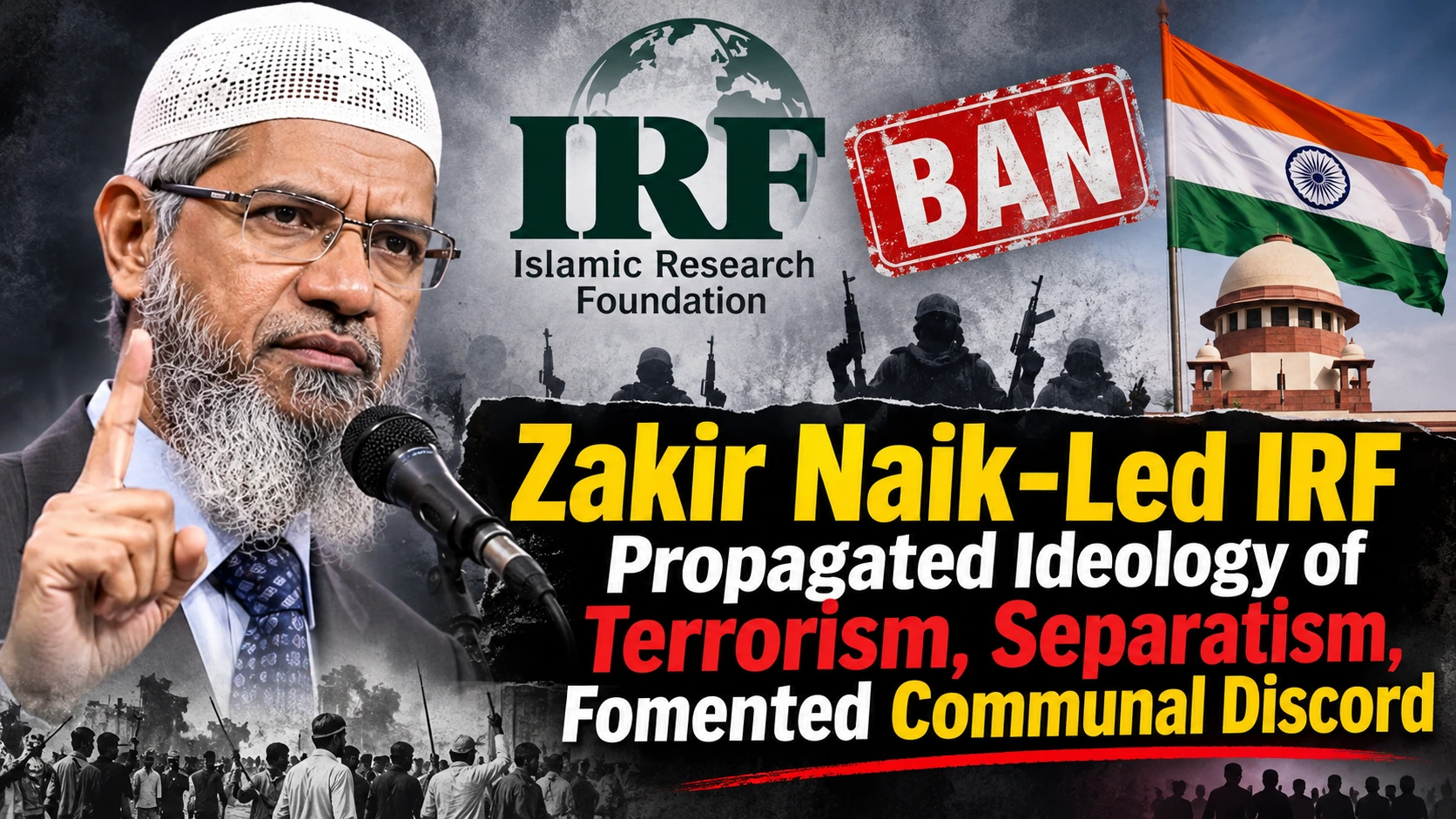
The role of religious organisations and influential public speakers in shaping social and political attitudes has become an important subject of debate. Allegations concerning the Islamic Research Foundation (IRF), led by controversial preacher Zakir Naik, have once again drawn attention to questions surrounding religious influence, public messaging, national security and communal harmony.
The allegations that the organisation propagated extremist ideology, encouraged separatist sentiments and contributed to communal discord raise serious questions about the relationship between religious preaching and social stability. However, such claims should be examined carefully, with a distinction between allegations, official findings and independently established facts.
On November 13, 2026, India’s Ministry of Home Affairs announced an extension of the ban on the Islamic Research Foundation under the Unlawful Activities (Prevention) Act (UAPA).
According to an official statement released through the Press Information Bureau, the government alleges that the organisation has been involved in activities threatening national security, encouraging communal hostility and promoting extremist and separatist ideas.
The government also alleged that the organisation’s activities could contribute to violent unrest and attempts to regroup individuals who had gone underground. These allegations formed the basis of the latest decision to continue restrictions on the organisation.
Zakir Naik is a prominent Islamic preacher known for his religious lectures, debates and international online presence. He founded the Islamic Research Foundation, an organisation established to promote Islamic education and religious activities.
Through lectures, publications and media platforms, Naik developed a substantial international audience. However, his public statements have also attracted criticism and scrutiny from Indian authorities over concerns about religious intolerance, radicalisation and the potential influence of his speeches on vulnerable audiences.
The controversy surrounding the IRF has therefore become part of a wider debate about religious expression, extremist messaging and national security.
The Indian government first declared the IRF an unlawful association in November 2016 under the UAPA. Authorities cited allegations involving the promotion of religious hatred, extremist ideology and activities considered harmful to national security.
In 2017, India’s National Investigation Agency (NIA) filed a chargesheet against Naik, the IRF and another organisation in connection with alleged offences involving communal hostility and unlawful activities.
A subsequent tribunal proceeding examined the government’s evidence and the IRF’s response. The foundation disputed the allegations, arguing that it was a charitable organisation and that statements attributed to Naik had been misrepresented or taken out of context.
In 2022, the UAPA Tribunal upheld the government’s decision to ban the organisation.
One of the major concerns highlighted by Indian authorities is the alleged connection between extremist messaging and the radicalisation of young people.
The government claims that speeches and activities associated with Naik and the IRF have contributed to religious hostility and encouraged extremist thinking. It has also raised concerns about separatist sentiments and activities that could undermine India’s sovereignty and territorial integrity.
These allegations highlight the importance of examining religious messaging and its possible consequences for public safety. At the same time, terrorism-related accusations must be assessed through credible evidence and appropriate legal processes.
India is a country with multiple religions, cultures and communities. Maintaining peaceful relationships between these groups is essential for social stability.
The controversy surrounding the IRF has renewed discussions about the responsibilities of religious leaders and organisations when addressing sensitive religious and political issues.
Public speakers with large audiences have considerable influence. Their statements can shape opinions, strengthen understanding or, when divisive, deepen mistrust between communities.
Promoting interfaith respect, responsible religious discussions and peaceful coexistence remains important for protecting social harmony.
The latest extension of the IRF ban signals that the Indian government intends to continue its restrictions on the organisation under the UAPA.
The development is also likely to keep Zakir Naik and the IRF under international scrutiny, particularly regarding their public messaging, organisational activities and the broader debate over religious extremism.
The extension of the ban on the Islamic Research Foundation represents another significant development in India’s efforts to address what its government describes as threats linked to extremism, separatism and communal hostility.
The allegations against Zakir Naik and the IRF remain a controversial subject involving religion, freedom of expression and national security. Ensuring accountability, relying on verified evidence and protecting peaceful religious coexistence will remain essential to addressing these concerns.