Physical Address
Islamabad, Pakistan
Physical Address
Islamabad, Pakistan

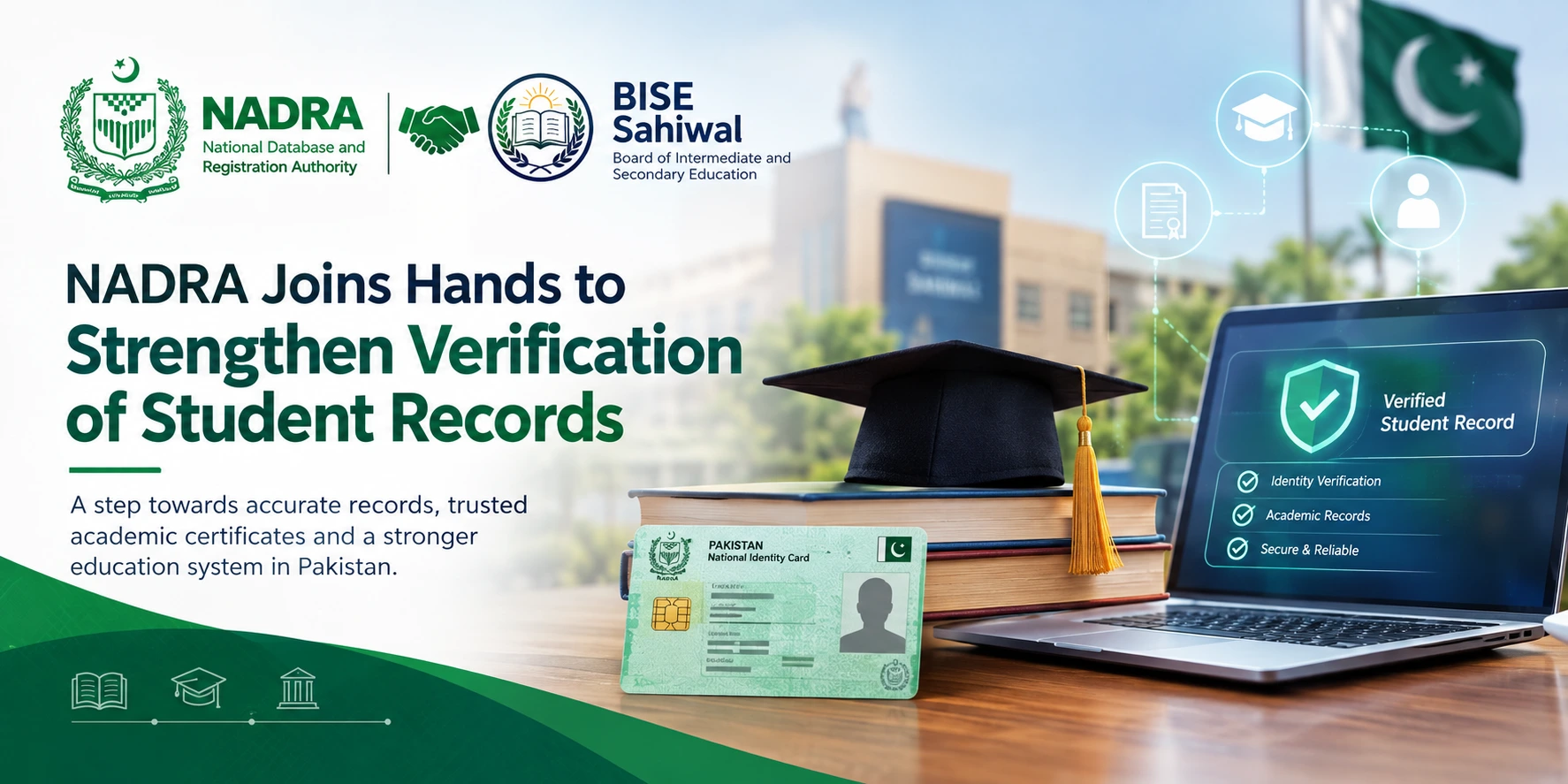
Pakistan is taking another step toward improving the transparency and reliability of its education system as the National Database and Registration Authority (NADRA) collaborates with relevant stakeholders to strengthen the verification of student records. The initiative aims to improve the accuracy of educational information, reduce the risk of fraudulent documentation, and make the student verification process more reliable.
The move highlights the growing importance of digital identity systems in Pakistan’s education sector, where accurate student data is essential for admissions, scholarships, examinations, and the issuance of academic credentials.
Accurate student records play a vital role in maintaining trust in educational institutions. Errors, duplicate entries, and falsified documents can create challenges for schools, colleges, universities, employers, and government departments.
By strengthening verification procedures, NADRA’s involvement can help relevant institutions establish greater confidence in student identities and the records associated with them. Reliable verification can also support efforts to prevent individuals from using false identities or misleading academic information to obtain educational or professional benefits.
NADRA maintains Pakistan’s national identity database and provides identity verification services to authorized organizations. Its expertise in identity management can help educational institutions improve the way they confirm students’ identities and validate information.
Collaboration with NADRA could support more consistent verification processes, reduce dependence on manual checks, and improve the reliability of student information shared between authorized institutions.
However, the precise scope of the collaboration, including the participating organizations, implementation timeline, and technical arrangements, should be confirmed through official announcements.
Strengthening student record verification could deliver several important benefits across Pakistan’s education system.
1. Reduced Risk of Fraud
Improved identity checks can make it more difficult to use false identities or fraudulent documents during admissions and other academic procedures.
2. More Reliable Student Data
Better verification can help institutions maintain accurate records and reduce discrepancies in students’ personal information.
3. Improved Administrative Efficiency
Digital verification systems may reduce paperwork, simplify record checks, and help institutions process applications more efficiently.
4. Greater Confidence in Academic Credentials
Reliable student information can support confidence in educational records used for further studies, scholarships, employment, and other official purposes.
5. Stronger Coordination Between Institutions
Secure information-sharing arrangements could help authorized educational bodies verify relevant details more consistently, subject to applicable rules and permissions.
Although stronger verification can improve accountability, protecting students’ personal information must remain a priority. Student records may contain sensitive identifying details, making secure data handling particularly important.
Any verification system should use appropriate access controls, secure information-sharing methods, and clear rules governing which organizations can access student data. Students should also receive appropriate information about how their records are used and protected.
A successful initiative will need to balance the benefits of accurate verification with privacy safeguards and transparent procedures.
The collaboration reflects the broader potential of digital transformation in Pakistan. As public services increasingly rely on electronic records, dependable identity verification can help institutions deliver services more accurately and efficiently.
For educational institutions, stronger verification could improve record management and reduce administrative complications. For students, it could mean a more dependable process for confirming their identities and academic information.
The practical impact, however, will depend on how the initiative is implemented, how widely it is adopted, and whether participating institutions have the technical resources needed to use it effectively.
NADRA’s collaboration to strengthen student record verification represents a potentially important development for Pakistan’s education sector. By improving identity checks, supporting accurate records, and helping prevent fraud, the initiative could contribute to a more transparent and trustworthy academic environment.
Its long-term success will depend on effective implementation, cooperation among educational institutions, and strong safeguards for students’ personal information. If these priorities are addressed, improved verification could become a valuable part of Pakistan’s wider efforts to modernize education administration and strengthen public trust.