Physical Address
Islamabad, Pakistan
Physical Address
Islamabad, Pakistan

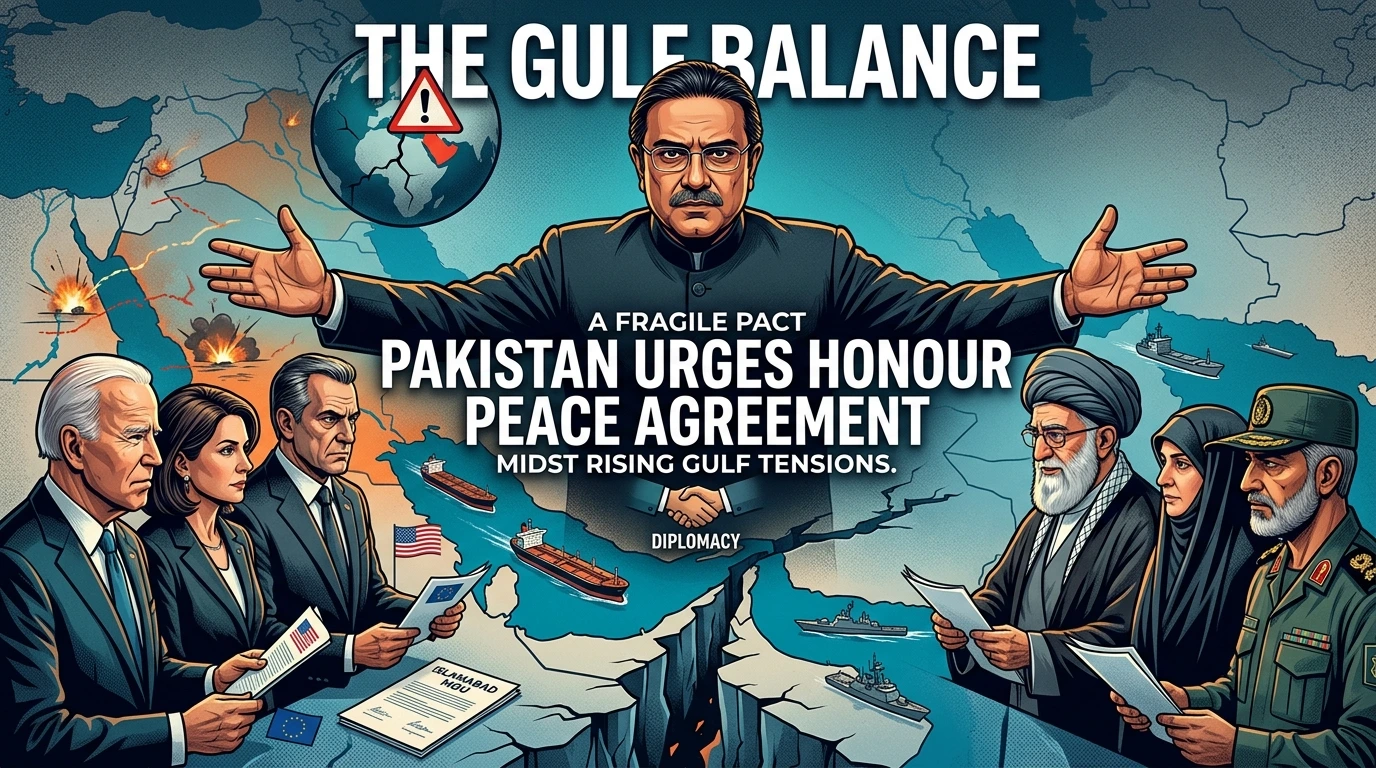
The Middle East finds itself once again teetering on a fragile precipice. Amid escalating Gulf tensions, lingering naval standoffs, and fresh threats to global energy lanes, Pakistan has issued a strong call to both the United States and Iran to exercise maximum restraint and honor their commitments under the Islamabad Memorandum of Understanding.
The appeal—underscored in high-level diplomatic discussions in Islamabad by Pakistani leadership—highlights both the fragility of recent diplomatic breakthroughs and Pakistan’s increasingly pivotal role as a regional mediator.
Earlier this year, following months of intense economic disruption, maritime standoffs, and volatile clashes across the Gulf, Pakistan hosted historical diplomatic talks in Islamabad. Those marathon negotiations resulted in a vital framework aimed at restoring maritime transit through the critical Strait of Hormuz, ending active military blockades, and charting a path toward broader regional stabilization.
However, maintaining peace in one of the world’s most sensitive geopolitical chokepoints has proven immensely challenging. With recent accusations of deal violations, renewed trade disruptions, and rhetoric escalating across the Gulf, the fragile accord faces its toughest test yet.
Pakistan’s imperative to keep both Washington and Tehran focused on diplomatic resolution is rooted in a mix of strategic, economic, and regional factors:
The Strait of Hormuz remains the artery of global energy commerce. Any collapse of the peace framework risks immediate supply chain shocks, sending crude prices soaring and imperiling energy-dependent economies across Asia and beyond. For South Asia, stable maritime transport in the Arabian Sea and Persian Gulf is not optional—it is vital to daily economic survival.
Pakistan shares a direct 900-kilometer border with Iran. A wider military conflict or protracted instability along its western flank poses severe security risks, including refugee flows, cross-border smuggling, and heightened domestic political strain.
Islamabad occupies a unique geopolitical position: it maintains long-standing strategic, economic, and defense ties with Washington and Saudi Arabia, while simultaneously preserving crucial diplomatic dialogue with neighboring Iran. Urging adherence to a peaceful dialogue enables Pakistan to act as a stabilizing bridge rather than being forced into a divisive alliance structure.
| Objective | Agreement Focus Area | Current Challenge |
| Maritime Transit | Unhindered passage through the Strait of Hormuz | Recent shipping flare-ups & maritime incidents |
| De-escalation | Cessation of direct targeted strikes & blockades | Mutual accusations of non-compliance |
| Regional Stability | Bilateral dialogue & sovereignty preservation | High-stakes geopolitical rhetoric |
“Dialogue remains the only viable path to resolving the conflict in the Gulf while ensuring safe maritime navigation and respecting the sovereignty of all states.”
As global powers monitor the situation, Pakistan’s diplomatic message is clear: military escalation yields no winners. Rebuilding trust will require both the US and Iran to step back from political posturing, enforce strict rules of engagement in international waters, and return fully to the commitments made under the Islamabad framework.
Whether the Islamabad peace initiative can hold will depend on the willingness of leadership in both Washington and Tehran to prioritize long-term stability over short-term retaliation. For now, Pakistan continues to stand firm in its push to keep the doors of diplomacy open.
What are your thoughts on the situation in the Gulf? Do you think regional mediation will be enough to hold the peace agreement together? Let us know in the comments below!