Physical Address
Islamabad, Pakistan
Physical Address
Islamabad, Pakistan

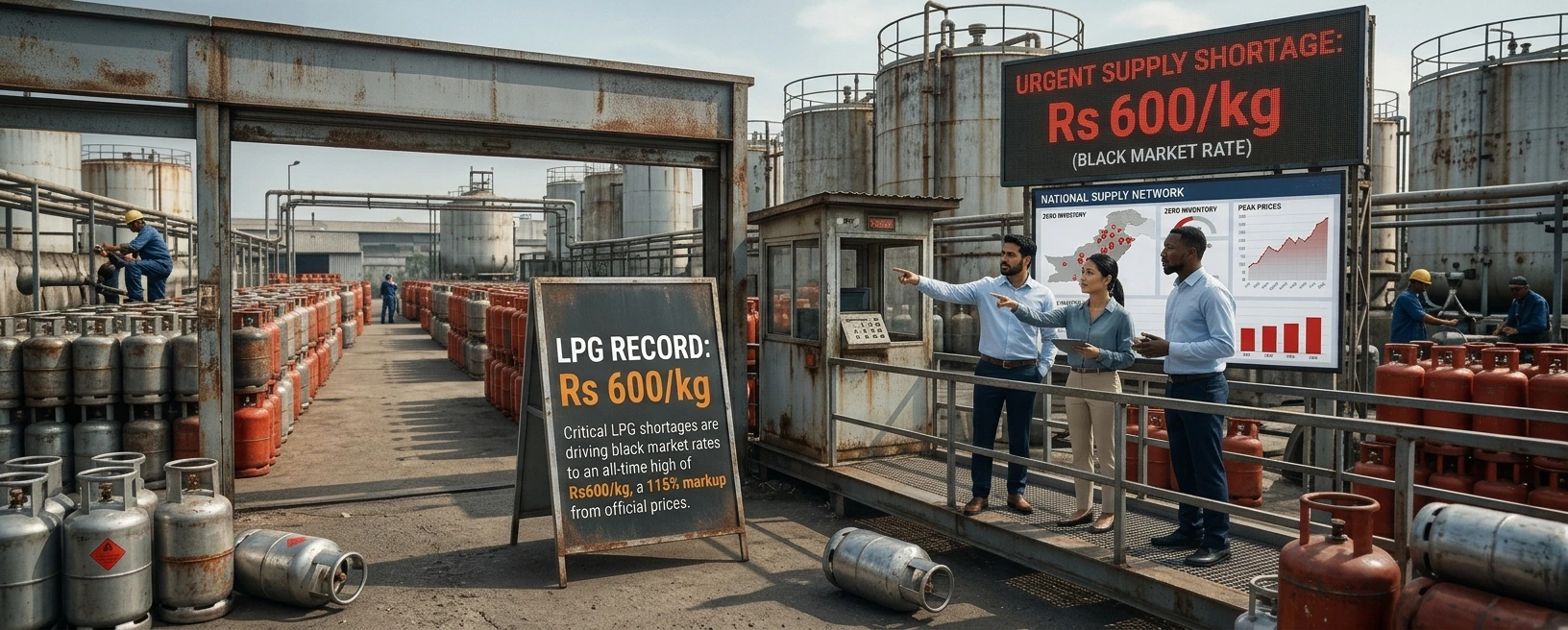
For millions of households and small business owners across the country, cooking a simple meal or warming up a living room is rapidly becoming an unaffordable luxury. Liquefied Petroleum Gas (LPG)—often considered the primary alternative fuel for communities lacking piped natural gas—has skyrocketed to a staggering, record-breaking Rs600 per kilogram in retail black markets.
This figure stands in stark contrast to the Oil and Gas Regulatory Authority’s (OGRA) officially notified rate of Rs279.34 per kg. With actual market prices floating at more than double the official price, an 11.8 kg domestic cylinder now costs consumers anywhere between Rs5,900 and Rs7,000+ in open markets and northern mountainous regions.
A combination of geopolitical disruptions, regulatory failures, and seasonal demand has created a perfect storm for the energy market:
A significant portion of the country’s LPG shortfall is typically met through overland imports. Recent border closures, trade corridor suspensions, and tightened cross-border movement have severely crippled the supply chain. With key supply routes throttled, local inventory levels have plummeted.
As autumn gives way to colder temperatures, demand in northern and high-altitude areas has climbed exponentially. National LPG demand typically surges from an average of 4,500 tonnes per day to nearly 7,000 tonnes per day during peak winter months. The sudden rush for heating and cooking fuel has far outstripped current available stock.
While domestic refineries and gas fields continue supplying base allocations, market oversight remains weak. Distributors and local retailers are capitalizing on the supply void by hoarding cylinders and selling at extortionate rates. Regulatory enforcement agencies—including local price administration bodies—have struggled to control illegal price markups on the ground.
The burden of this price spike lands heaviest on low- and middle-income families, daily wage earners, and small food vendors:
To restore stability and prevent further exploitation of vulnerable consumers, immediate action is required across several fronts:
Has your local area seen LPG price hikes or cylinder shortages recently? How are you or your business coping with rising energy costs? Share your experience in the comments below!