Physical Address
Islamabad, Pakistan
Physical Address
Islamabad, Pakistan

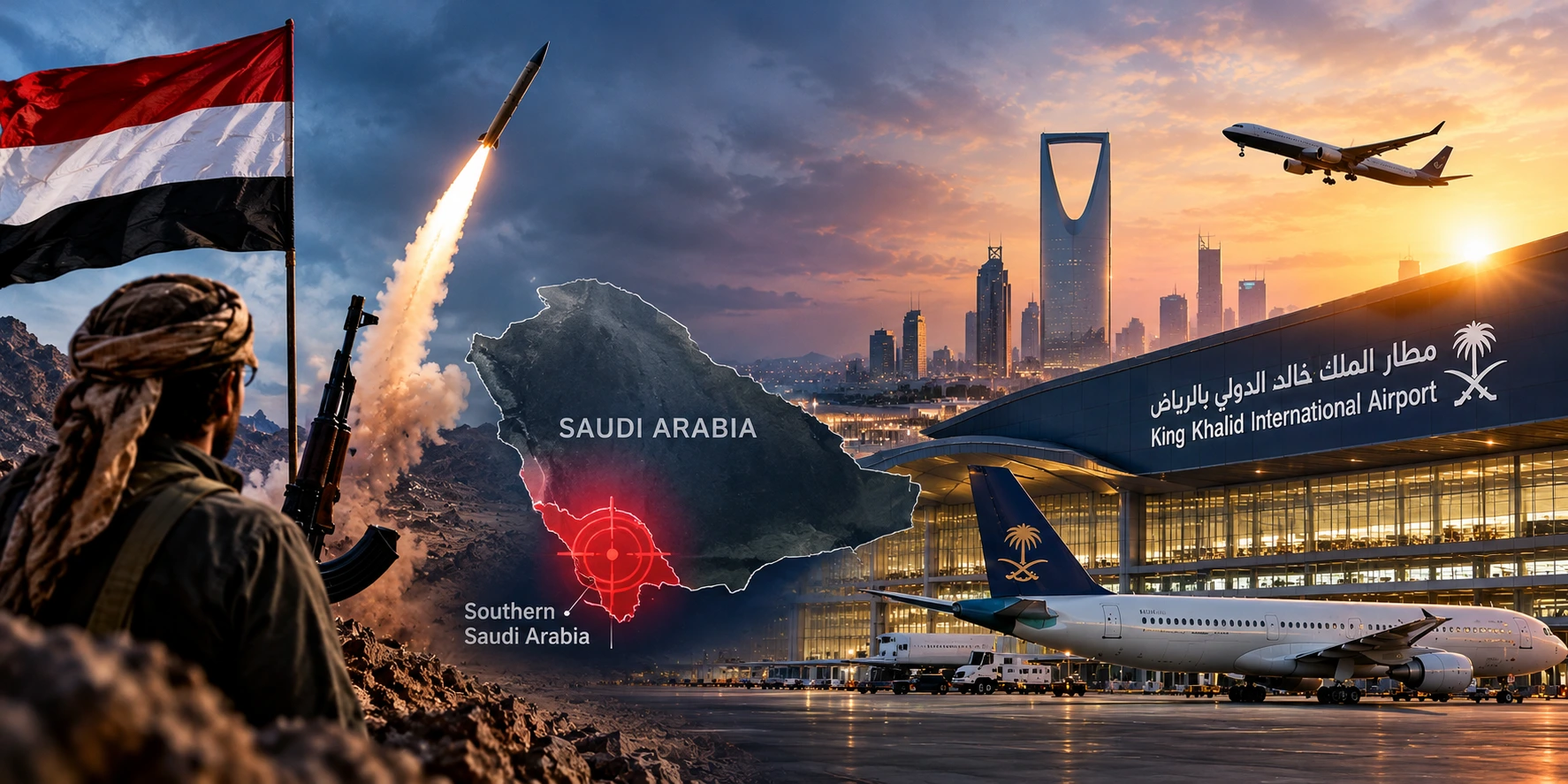
Tensions in the Middle East remain high as Yemen’s Houthi movement targets southern Saudi Arabia while Riyadh’s airport prepares to resume operations. The developments highlight ongoing security concerns in the region and the potential impact of renewed attacks on air travel, regional stability, and civilian safety.
The reported Houthi attacks targeting southern Saudi Arabia have raised fresh concerns about the security situation along the Saudi-Yemeni border. Southern Saudi Arabia has faced security threats linked to Yemen’s prolonged conflict, making the region particularly sensitive to military escalation.
The Houthis, an armed movement based in Yemen, have previously launched missile and drone attacks against Saudi targets during periods of heightened conflict. Such incidents have increased pressure on regional authorities to strengthen air defences and protect critical infrastructure.
The latest reported developments come at a time when regional tensions continue to threaten efforts to restore stability and reduce the risk of a wider confrontation.
The planned reopening of Riyadh airport is another important development amid the security concerns. Airports are essential to international travel, business activity, tourism, and the movement of people and goods.
Any disruption to airport operations can affect passengers, airlines, and businesses while creating uncertainty for travellers. Authorities must therefore balance the need to restore normal services with the responsibility of maintaining passenger safety.
Travellers planning to fly through Riyadh should check official airport announcements and airline notifications for the latest information about flight schedules, delays, cancellations, and any security-related restrictions.
The situation reflects the wider challenges facing the Middle East, where military confrontations and cross-border attacks can quickly affect neighbouring countries. Saudi Arabia’s security concerns are closely connected to the conflict in Yemen, which has continued for years despite various diplomatic initiatives.
Attacks involving missiles or drones can also raise concerns about the safety of airports, energy facilities, transport networks, and other critical infrastructure. Even when air-defence systems intercept incoming threats, security alerts can lead to temporary disruptions and heightened precautions.
The latest reports underline the importance of monitoring developments carefully and relying on verified information rather than unconfirmed claims circulating on social media.
For passengers, security-related developments can create uncertainty about travel plans. Airlines may need to adjust schedules, while airport authorities may introduce additional screening measures or operational restrictions when necessary.
Businesses that depend on international travel and air cargo can also face disruptions if flight operations are affected. A prolonged period of uncertainty could create additional costs for airlines, travellers, and companies operating across the region.
However, the actual impact will depend on the security situation, official decisions, and whether airport operations resume as planned.
Preventing further escalation will require sustained diplomatic engagement alongside measures to protect civilians and critical infrastructure. Saudi Arabia and other regional stakeholders have an interest in avoiding a wider conflict that could threaten economic activity and international transport.
Efforts to reduce tensions surrounding Yemen remain important for long-term regional stability. De-escalation, dialogue, and compliance with international humanitarian law are essential to reducing risks to civilians.
The reported Houthi targeting of southern Saudi Arabia, alongside preparations for Riyadh airport to reopen, highlights the continuing relationship between regional security and civilian infrastructure. The situation remains important for travellers, airlines, businesses, and policymakers across the Middle East.
As events develop, official announcements and credible reporting will be essential to understanding the full impact of the latest developments. For passengers, checking directly with airlines and airport authorities remains the most reliable way to obtain current travel information.