Physical Address
Islamabad, Pakistan
Physical Address
Islamabad, Pakistan

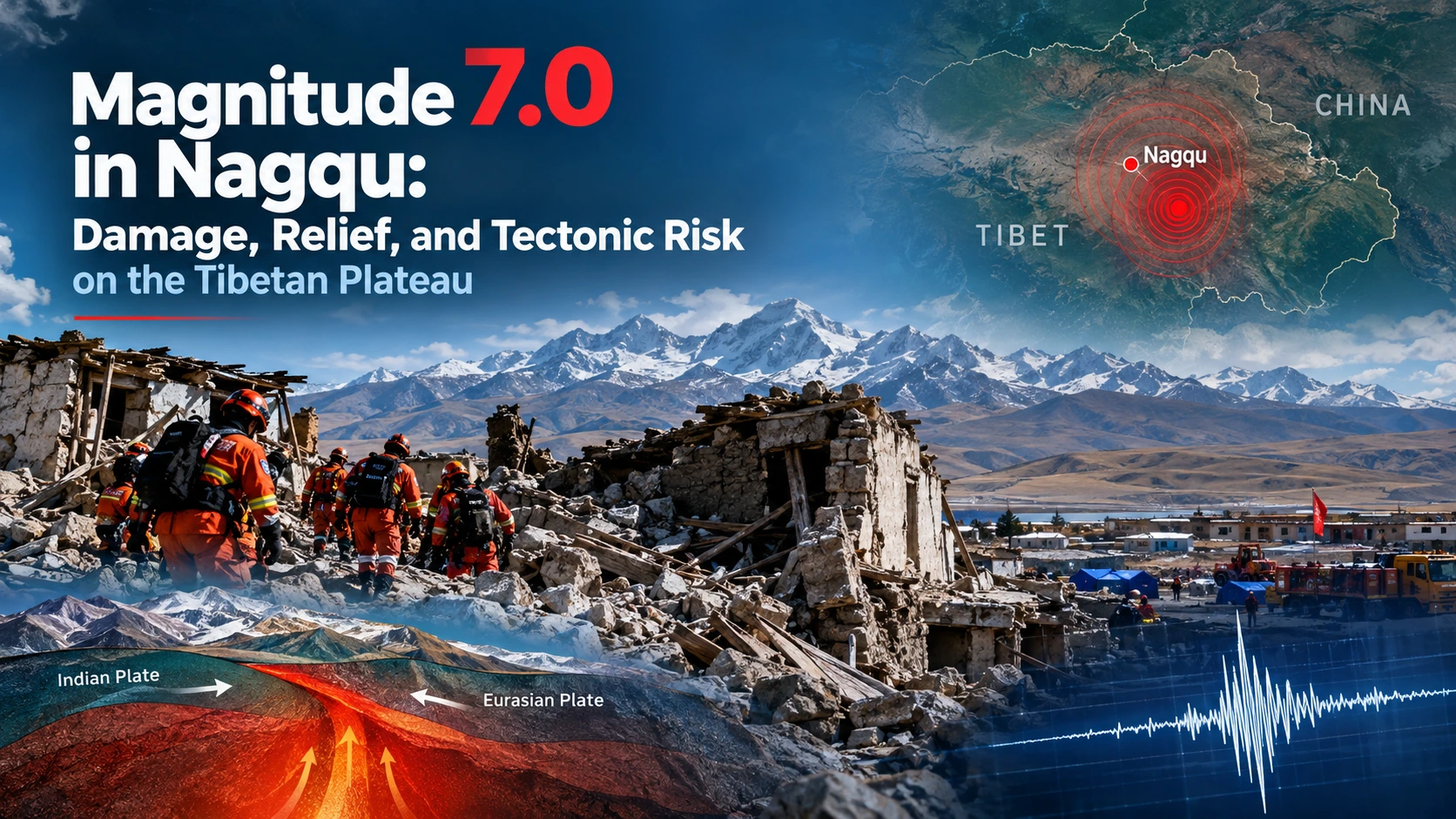
On October 22, 2026, a powerful 7.0-magnitude earthquake struck northern Tibet, reminding the world of the immense geological forces that continuously shape—and shake—the Himalayas.
Centered near Baqên County in the high-altitude region of Nagqu, the quake shook mountain communities at elevations exceeding 4,800 meters (nearly 16,000 feet). With tremors felt across South Asia and multiple aftershocks following in quick succession, emergency response teams faced daunting challenges in one of the most rugged terrains on Earth.
The earthquake struck during the evening hours, originating at a shallow depth of around 10 to 18 kilometers. Shallow earthquakes often concentrate their energy near the surface, causing severe ground shaking over immediate areas.
Tibet sits atop the Tibetan Plateau—often called the “Roof of the World”—which was formed by the ongoing, slow-motion collision between the Indian and Eurasian tectonic plates.
As the Indian Plate pushes northward into Eurasia at a rate of roughly 4 to 5 centimeters per year, immense pressure builds inside the Earth’s crust. While much of this collision creates giant thrust faults, the plateau itself expands eastward, creating normal faulting—the exact mechanism responsible for this latest 7.0-magnitude tremor. Over the past century, nearly 30 earthquakes of magnitude 7.0 or higher have recorded across this fragile high-altitude system.
Disaster relief in Tibet poses logistics hurdles found in few other places:
Local authorities deployed over 1,600 emergency personnel, bringing thousands of prefabricated housing units, heavy-duty tents, and medical aid to stabilize the affected areas.
This recent disaster highlights the urgent need for enhanced earthquake resilience across Himalayan communities:
As recovery efforts unfold in Nagqu, our thoughts are with the families and communities navigating loss and displacement in extreme conditions. Tectonic forces will continue to shape the Himalayas, making long-term investment in disaster readiness and sustainable building vital for protecting human lives on the Roof of the World.