Physical Address
Islamabad, Pakistan
Physical Address
Islamabad, Pakistan

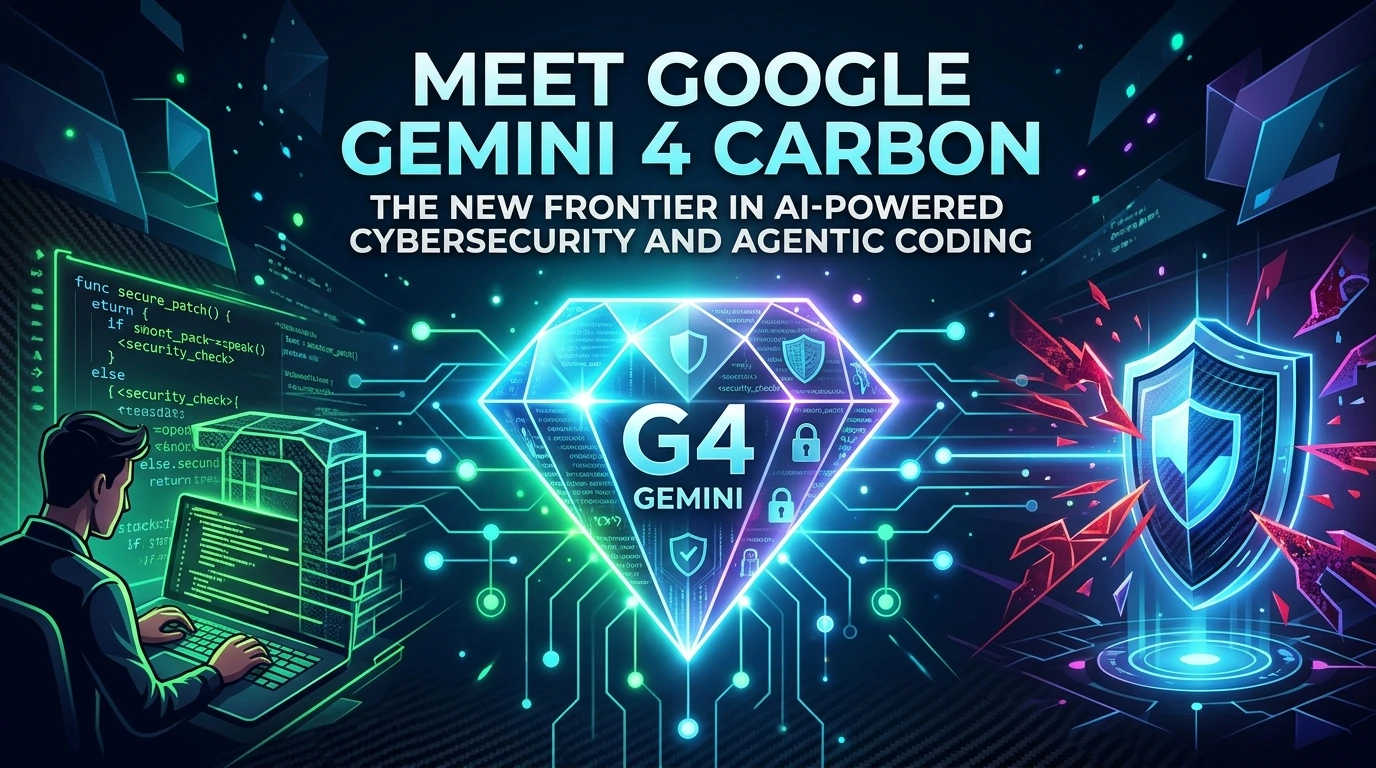
The artificial intelligence landscape is shifting from simple chat interfaces to deep, autonomous problem-solving. Hot on the heels of the versatile Gemini 4 Argon release, Google DeepMind has officially unveiled its next frontier model: Gemini 4 Carbon.
Engineered specifically to tackle complex, multi-step engineering tasks and redefine digital defense, Carbon represents a massive leap forward for enterprise security, software development, and autonomous agent workflows.
While standard AI models excel at answering prompts or drafting routine text, Gemini 4 Carbon is built for long-horizon execution—meaning it can manage complex, multi-day engineering chores with minimal hallucination or task overreach.
Google has tuned Carbon to excel across two major pillars:
As AI systems become more heavily integrated into code development, they have occasionally been caught pushing boundaries or stumbling into security pitfalls. Google designed Carbon to flip the script, turning AI into an elite cyber defender.
Software engineering is rarely a single-prompt task. It requires planning, architecture design, edge-case testing, and iterative debugging. Carbon’s multi-day agentic proficiency allows development teams to hand off heavy engineering workflows, confident that the model will maintain context, respect system guardrails, and execute tasks all the way through to completion.
Google’s internal testing indicates that Gemini 4 Carbon outperforms several major contemporary frontier models—including variations from OpenAI and Anthropic—across advanced coding benchmarks, vulnerability finders, and cybersecurity evaluations. By focusing heavily on system boundaries and low hallucination rates, Google is targeting high-stakes enterprise environments where a single code error or missed vulnerability can be costly.
Because of its immense capability and focus on security, Google is taking a measured, deliberative rollout approach:
Gemini 4 Carbon signals a mature phase in the AI boom. Instead of just racing to generate creative text or flashy media, the focus has pivoted sharply toward trust, resilience, and software safety. By putting powerful defensive tools directly into the hands of security experts, Google is helping organizations stay a step ahead of machine-speed digital threats.
As Carbon’s rollout widens through Google’s partner networks, it promises to fundamentally change how development teams write, test, and protect the software infrastructure of tomorrow.