Physical Address
Islamabad, Pakistan
Physical Address
Islamabad, Pakistan

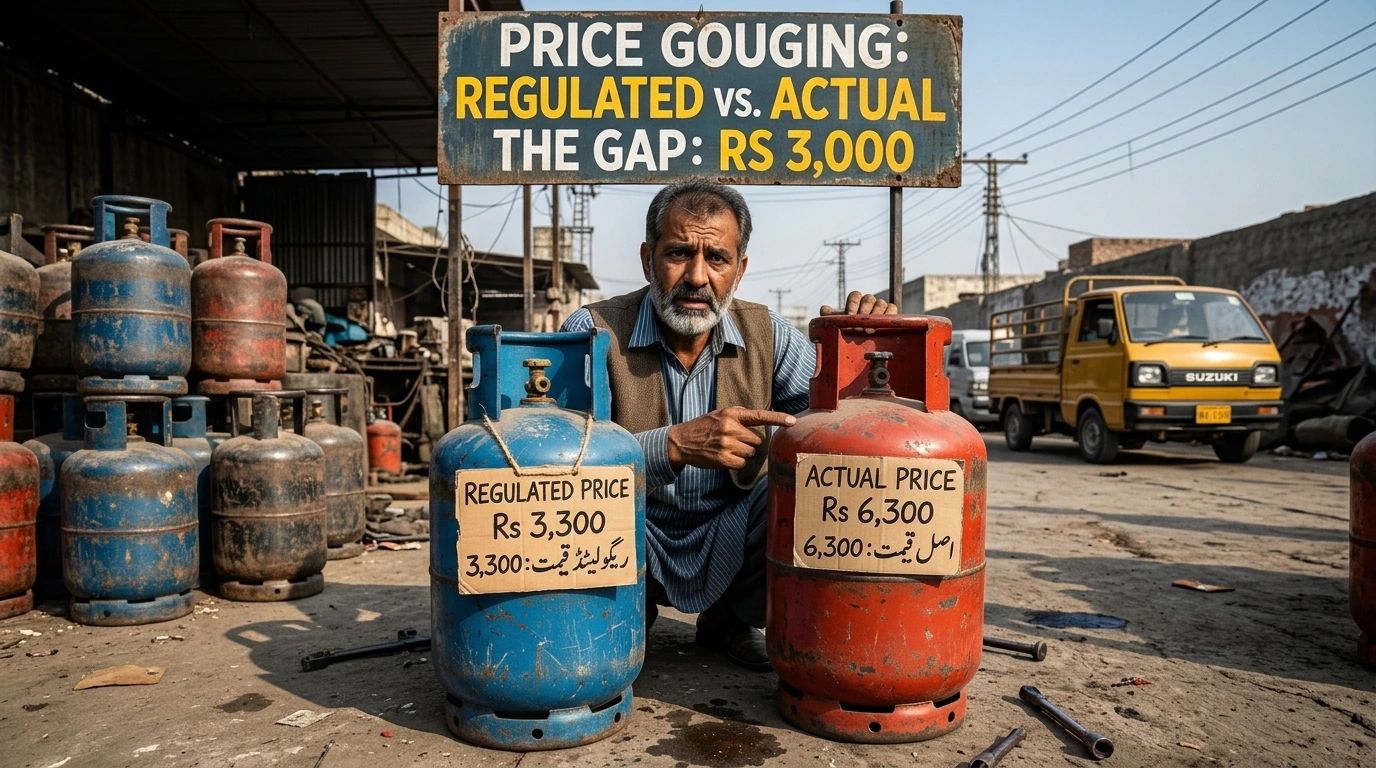
Imagine going to your local petrol pump expecting to pay the government-notified rate, only to be charged double at the nozzle. You would naturally protest, demand to speak to the manager, or report the violation. Yet, every single day across Pakistan, millions of households are quietly forced to pay almost double the legal limit for a basic life necessity: Liquefied Petroleum Gas (LPG).
According to notifications from the Oil and Gas Regulatory Authority (OGRA), a standard 11.67 kg domestic LPG cylinder should cost around Rs 3,296 (roughly Rs 3,300). However, data from the Pakistan Bureau of Statistics (PBS) Sensitive Price Index shows that the average retail price across 17 major cities recently surged to Rs 6,311—with households in cities like Bahawalpur, Sialkot, and Islamabad paying anywhere between Rs 6,600 and over Rs 7,000 per cylinder.
That isn’t a minor price fluctuation; it is a 94% markup above the legal ceiling. How did an essential fuel resource become the subject of such unchecked price gouging, and why are ordinary citizens footing the bill?
The burden of this inflation is deeply unequal. Households connected to piped natural gas networks—typically located in planned urban centers—remain insulated by regulated, subsidized tariffs.
Meanwhile, semi-urban neighborhoods, rural communities, and lower-income households rely heavily on LPG cylinders for cooking and heating. These families are essentially penalized simply because of where they live. When a domestic cylinder jumps from Rs 3,300 to Rs 6,300, it eats directly into budgets meant for groceries, healthcare, and education.
Why is the gap expanding so rapidly? Middlemen and distributor cartels frequently point to supply disruptions or global fuel dynamics. While market tightness does play a role, the primary driver behind this price explosion is artificial scarcity and hoarding.
When traders anticipate rising demand—especially as cooler weather sets in—some hoard inventory to force local prices up. Because LPG distribution is decentralized compared to piped gas, local distributors operate with minimal real-time oversight, enabling them to ignore official rate cards and set prices based on panic rather than regulatory caps.
Pakistan does not lack clear regulations. OGRA issues detailed monthly price notifications breaking down producer prices, margins, taxes, and final consumer limits.
The breakdown happens at the level of local administration and enforcement. Price magistrates, district administration inspectors, and regulatory bodies exist on paper, but weekly field verification remains sporadic. Without routine city-by-city inspections and strict penalties for non-compliant dealers, official notifications remain mere suggestions.
Whenever fuel prices skyrocket, public pressure immediately builds for government subsidies. However, injecting financial subsidies into a broken market structure will only make things worse.
When retail dealers are already selling nearly 100% above the price ceiling, any government subsidy intended for the consumer will simply be absorbed by predatory distributors and cartels. The issue isn’t that the official price is too high—it’s that no one is enforcing it.
The first rupee of relief must come from restoring market discipline, not expanding public debt:
Until regulatory authorities transition from issuing monthly notifications to enforcing them on the ground, everyday consumers will continue paying double for a basic human necessity