Physical Address
Islamabad, Pakistan
Physical Address
Islamabad, Pakistan

Published: November 7, 2026 | Business & Aviation News
The ongoing Iran war has dealt a major financial blow to Emirates Airline, one of the world’s leading international carriers. The Dubai-based airline has reported a sharp decline in its profits as regional conflict, airspace restrictions, flight disruptions, and rising fuel prices continue to put pressure on the aviation industry.
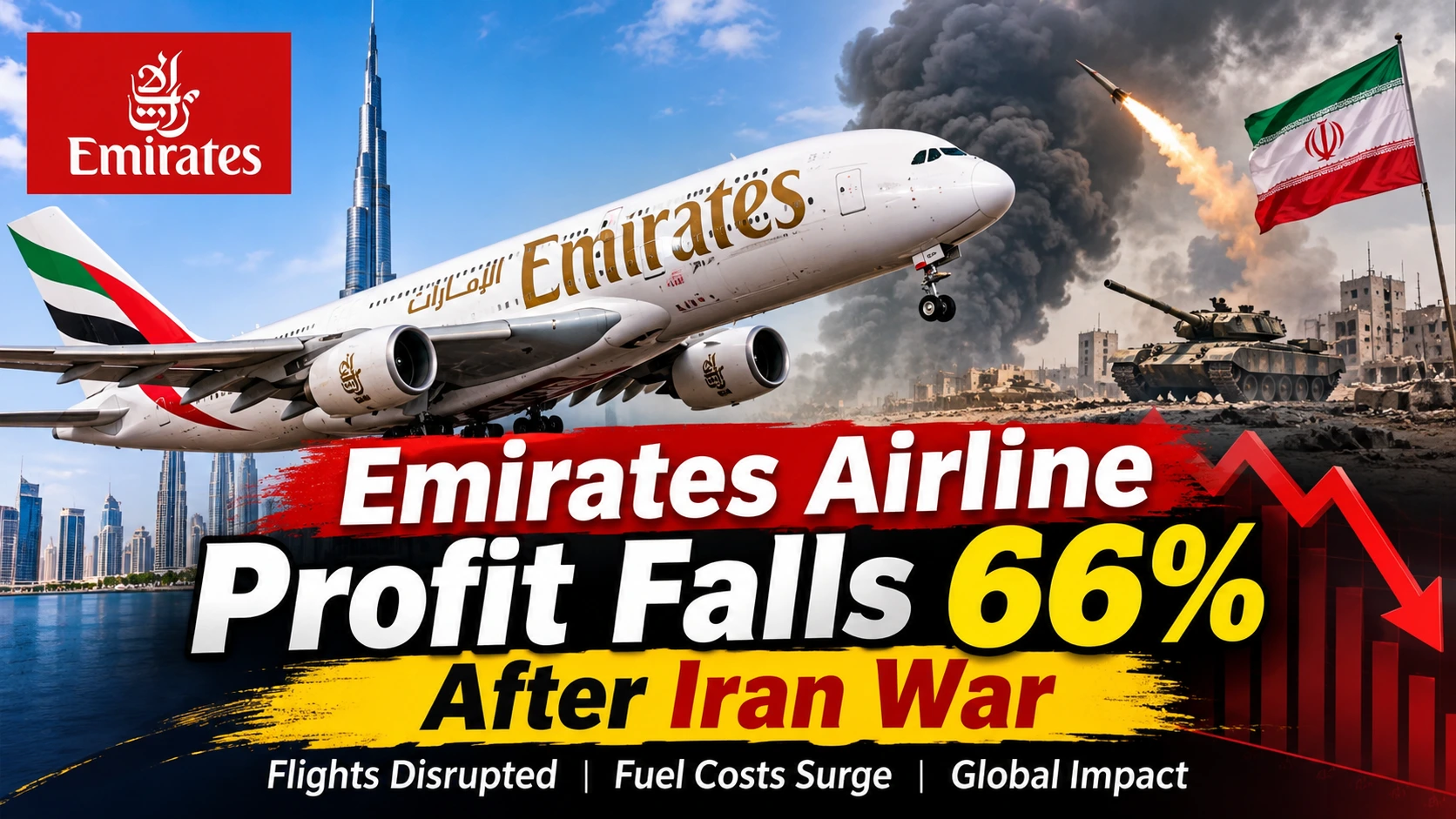
According to its latest financial results announced on November 5, 2026, Emirates recorded a 66% decline in first-half net profit for the 2026–27 financial year compared with the same period last year. The results highlight how geopolitical tensions can affect even some of the world’s strongest airline businesses.
Emirates reported an after-tax profit of approximately AED 3.3 billion (around $903 million) for the six months ending September 30, 2026.
This represents a significant decline from the previous year’s performance, when the airline benefited from record-breaking travel demand and strong financial results.
The airline’s revenue also declined by 13% to AED 56.9 billion, reflecting reduced passenger traffic and operational challenges caused by the conflict.
Despite the decline, Emirates remained profitable, demonstrating the strength of its international network and financial management strategies. Reuters+1
The conflict involving Iran, the United States, and Israel has created serious challenges for airlines operating across the Middle East.
Several countries introduced temporary airspace restrictions and closures, forcing airlines to change flight routes, cancel services, and manage unexpected operational difficulties.
As a major international aviation hub, Dubai plays an important role in connecting passengers travelling between Europe, Asia, Africa, and other regions. Disruptions in the region therefore have a direct impact on Emirates’ global operations.
Travel advisories and uncertainty also influenced passenger decisions, making it more difficult for the airline to maintain its previous traffic levels. Reuters+1
One of the biggest challenges for Emirates has been the sharp increase in aviation fuel prices.
Fuel is one of the airline’s largest operating expenses. During the first half of 2026–27, Emirates’ fuel costs before hedging gains increased by 60% compared with the previous year.
The airline used its fuel price risk-management strategy to reduce the impact. These measures generated AED 7.1 billion in gains, helping limit the net increase in fuel costs to 13%.
However, fuel still represented approximately 34% of the airline’s operating costs, making expensive fuel a major concern for its financial performance. Emirates Group+1
The conflict also affected passenger demand and international travel.
Emirates carried approximately 21.8 million passengers during the first six months of the financial year, representing a 22% decline compared with the same period last year.
Its passenger-carrying capacity also decreased by 17%, while its passenger seat factor dropped from 79.5% to 72%.
These figures demonstrate the challenges facing the airline as travellers reconsider their plans and regional flight disruptions continue. Reuters+1
Although passenger operations faced difficulties, Emirates SkyCargo delivered a stronger performance in terms of revenue.
The cargo division transported approximately 1.2 million tonnes of goods during the reporting period. While cargo volume declined slightly, cargo revenue increased by an impressive 52%.
Disruptions to maritime transportation and reduced airfreight capacity across the region encouraged some businesses to rely more heavily on air cargo services.
This growth helped provide additional financial support during a difficult period for the airline. Emirates Group+1
Despite the challenges, Emirates has continued working to restore its international operations.
By the end of September 2026, the airline had restored services across approximately 91% of its network.
The company is also continuing investments in aircraft, passenger services, cabin upgrades, and cargo operations. These investments are intended to strengthen its long-term position in the global aviation market.
However, the pace of recovery will depend heavily on regional security, fuel prices, and the return of passenger confidence. Reuters+1
The latest financial results show that even major international airlines are vulnerable to geopolitical instability.
Emirates has a strong global reputation, an extensive international network, and substantial financial resources. Nevertheless, prolonged conflict could create further pressure through expensive fuel, reduced passenger demand, and unpredictable flight operations.
The airline’s ability to restore normal services and control operating costs will be important in determining its financial performance during the remaining months of 2026–27.
Emirates Airline’s 66% profit decline highlights the economic consequences of the Iran war on the global aviation industry. Rising fuel prices, airspace restrictions, and declining passenger numbers have created serious challenges for the Dubai-based carrier.
Although its cargo business and fuel-management strategy have helped reduce some of the financial pressure, the airline still faces an uncertain operating environment.
The coming months will be crucial for Emirates as it works to recover passenger traffic, restore its flight network, and protect its position as one of the world’s leading international airlines.