Physical Address
Islamabad, Pakistan
Physical Address
Islamabad, Pakistan

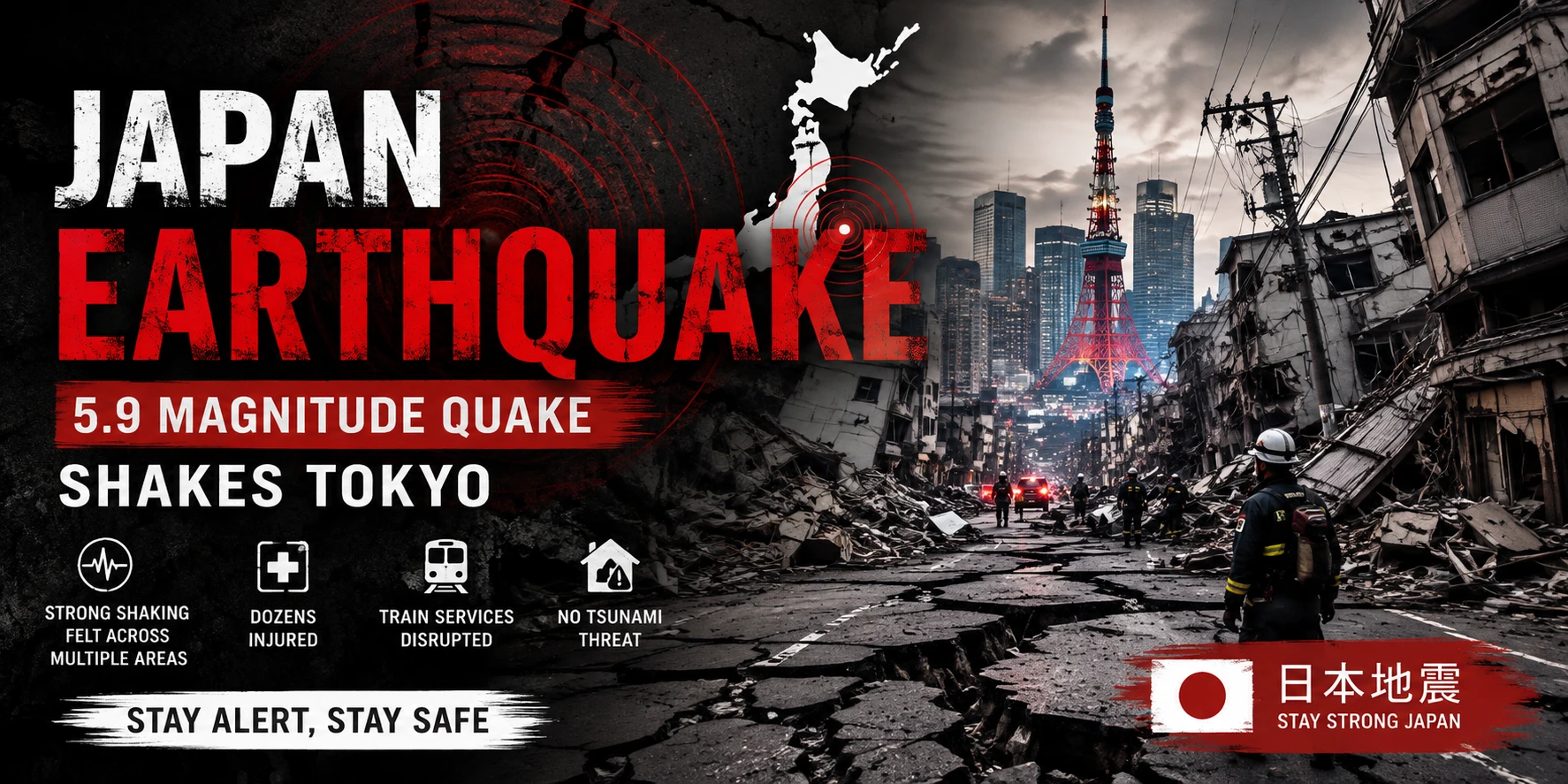
Japan was hit by a strong earthquake early Sunday, August 23, 2026, with powerful shaking felt across Tokyo and surrounding areas. The magnitude-5.9 earthquake injured at least 37 people, disrupted some train services and caused a water pipe to rupture in Tokyo. AuthJapan orities said there was no tsunami threat from the earthquake.
The earthquake struck at around 2:00 a.m. local time on August 23, when many residents were asleep. According to the Japan Meteorological Agency, the epicenter was in southern Ibaraki Prefecture, at a depth of approximately 70 kilometers.
The earthquake was strongly felt in Tokyo and several neighboring prefectures, including Saitama, Kanagawa, Chiba and Ibaraki.
Mobile phones issued emergency alerts as buildings shook, waking residents and creating moments of panic across the Tokyo region.
At least 37 people were reported injured across five prefectures. Most injuries were minor and happened when people fell or collided with furniture after being suddenly awakened by the shaking.
One elderly woman reportedly suffered a serious hip injury after falling from her bed.
There were no immediate reports of widespread building collapses or deaths connected to this particular earthquake.
The earthquake also affected transportation in the Tokyo region. Some train services experienced delays, including services connected with Narita Airport.
Japan’s high-speed bullet train network, however, continued operating normally according to reports.
The disruption highlights how even a moderate earthquake can temporarily affect transportation in one of the world’s busiest metropolitan areas.
Authorities also reported a ruptured underground water pipe in Tokyo’s Koto Ward following the earthquake. The problem was quickly addressed, according to reports.
Emergency teams were deployed to assess possible damage and monitor the situation.
No tsunami warning was issued for this earthquake.
Japan’s Meteorological Agency currently lists no major tsunami warning, tsunami warning or advisory in effect.
This was an important distinction because earthquakes occurring beneath or near the sea can sometimes generate dangerous tsunami waves.
Japanese authorities have urged residents to remain cautious because aftershocks can occur following a significant earthquake. People in affected areas have been encouraged to stay alert and follow official emergency instructions.
Japan has extensive earthquake-preparedness systems, including emergency mobile alerts and earthquake monitoring networks designed to give people valuable seconds of warning.
The latest Tokyo-area earthquake comes after a much more destructive magnitude-7.1 earthquake in southern Japan in July 2026. That earthquake caused deaths, injuries and significant damage and also triggered a tsunami warning.
The July disaster and the latest August earthquake have once again highlighted Japan’s exposure to seismic activity.
Japan sits in one of the world’s most active earthquake zones. Several tectonic plates meet around the Japanese archipelago, creating frequent seismic activity.
Because earthquakes are a regular part of life in Japan, the country has developed strict building standards, emergency warning systems, evacuation procedures and disaster-preparedness programs.
After a strong earthquake, authorities generally advise people to:
Japan’s government also provides disaster-preparedness information for residents and visitors through its official disaster-management resources.
The August 23, 2026, magnitude-5.9 earthquake near Tokyo caused strong shaking and at least 37 injuries, along with temporary transportation disruptions and localized infrastructure damage. However, there was no tsunami threat and no immediate indication of widespread catastrophic damage from this particular event.
Authorities continue to monitor the region for aftershocks, while residents are being encouraged to remain cautious and follow official safety instructions.
This article is based on the latest reports available on August 24, 2026. Information may change as Japanese authorities complete their damage assessments.