Physical Address
Islamabad, Pakistan
Physical Address
Islamabad, Pakistan

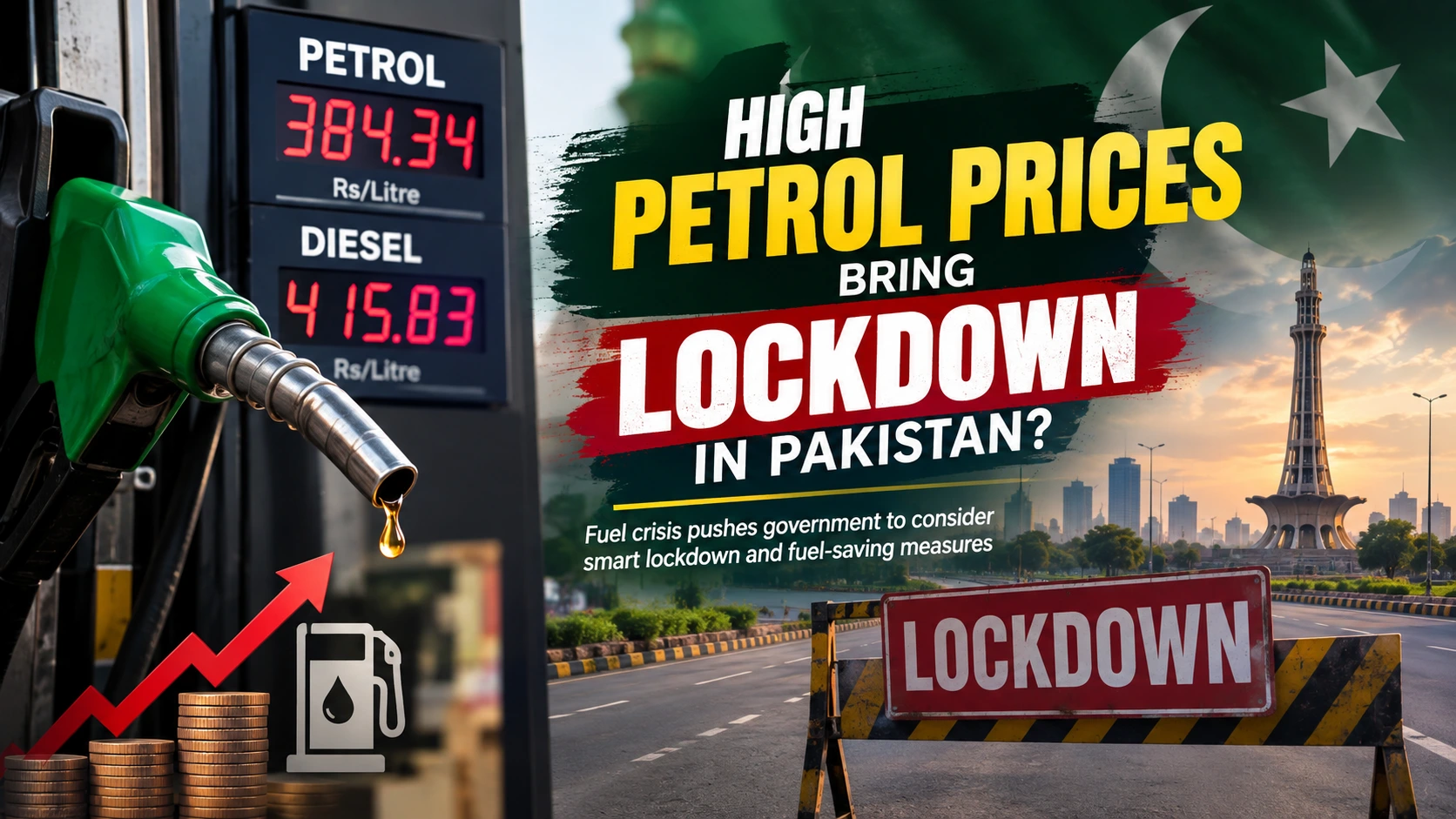
Pakistan is facing growing pressure from rising petroleum prices, with the government considering a “smart lockdown” and other fuel-saving measures to reduce consumption. The discussion comes as international oil-market volatility and supply concerns continue to push domestic fuel costs higher.
As of September 16, 2026, petrol has risen to Rs384.34 per litre, while high-speed diesel is priced at Rs415.83 per litre. The latest revision increased petrol by Rs4.10 and diesel by Rs6.41 per litre.
The reported proposal is not necessarily a return to the strict COVID-era lockdowns. Instead, officials are considering targeted measures designed to reduce unnecessary fuel consumption.
Possible measures reported include:
The aim would be to lower demand for petrol and diesel while allowing essential businesses and services to continue operating.
For ordinary Pakistanis, expensive fuel can quickly increase the cost of daily life. Motorists are paying more to travel to work, while transport operators face higher operating expenses.
Higher fuel costs can also affect:
The impact is particularly significant for people who depend on motorcycles, cars or public transport for their daily commute.
The recent increases are linked to volatility in international oil markets and disruptions and tensions affecting energy supplies. Pakistan has also moved toward more frequent fuel-price revisions because of fluctuations in international prices.
The government is reportedly weighing different options to control fuel consumption and manage the pressure on the economy. A smart lockdown, if introduced, would likely focus on reducing unnecessary movement rather than completely shutting down economic activity.
For businesses and workers, however, any restrictions could create new challenges. The effectiveness of such measures would depend on how they are implemented and whether essential services, public transport and supply chains remain operational.
Pakistan’s rising petrol prices are putting additional pressure on households, businesses and the transport sector. With petrol now at Rs384.34 per litre, the government’s reported consideration of a smart lockdown reflects the growing need to conserve fuel.
Whether targeted restrictions can significantly reduce fuel consumption without creating additional economic difficulties remains an important question as Pakistan responds to the continuing energy-price pressure.