Physical Address
Islamabad, Pakistan
Physical Address
Islamabad, Pakistan

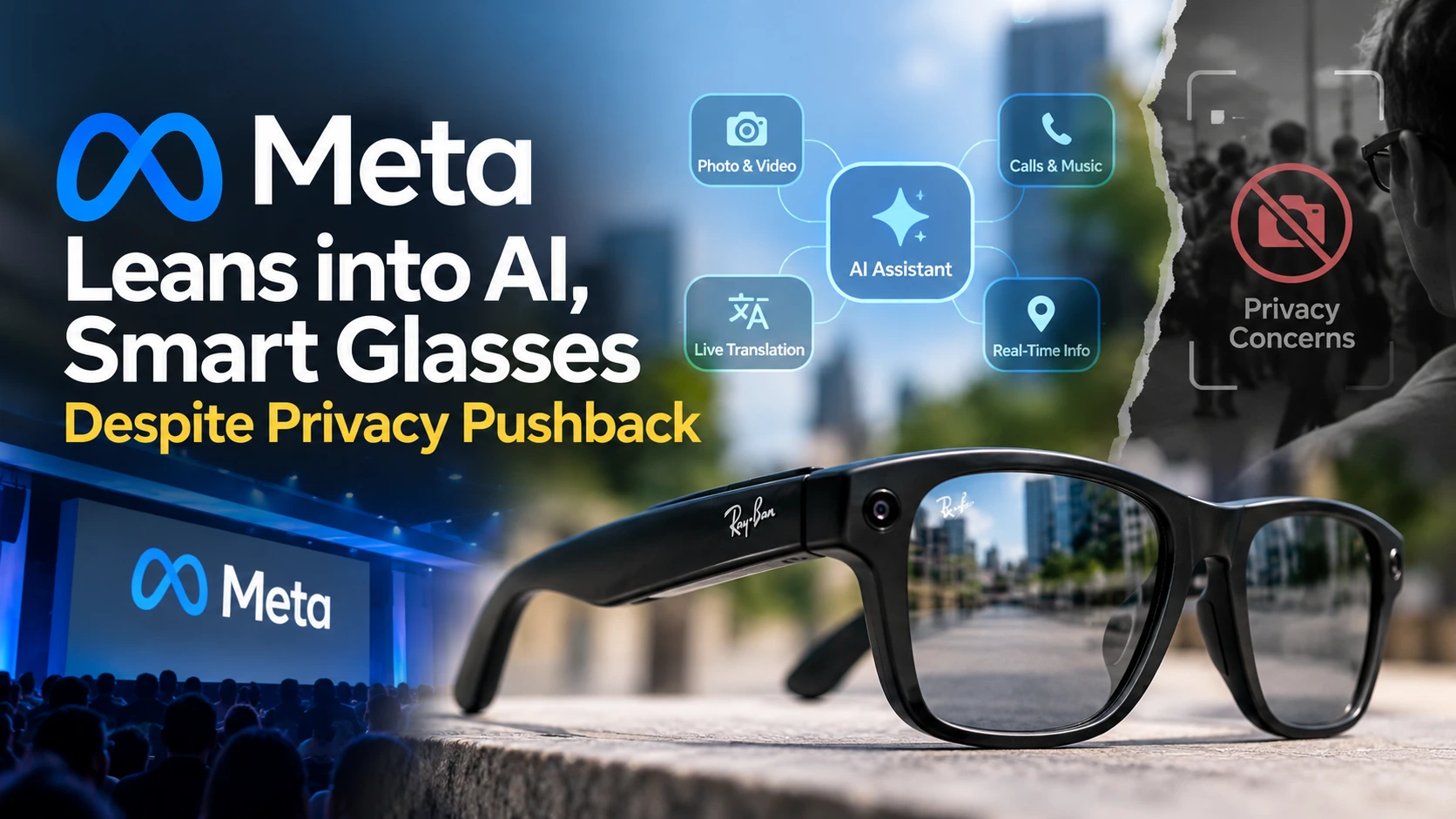
Meta is continuing to expand its focus on artificial intelligence and smart wearable devices despite growing concerns about privacy and the way AI-powered glasses could be used in public spaces.
The company has invested heavily in AI as it looks beyond traditional social media products. At its annual Meta Connect event, the company is showcasing new AI capabilities and wearable technology as part of its broader strategy for the next generation of computing.
Meta’s AI-powered smart glasses have become an important part of its hardware strategy. The glasses combine conventional eyewear with cameras, microphones, speakers and access to AI services, allowing users to interact with an assistant without reaching for a smartphone.
Features can include hands-free photography, video recording, music, calls and AI-powered assistance. Meta has also been exploring ways for its glasses to understand a user’s surroundings and provide information in real time.
The technology reflects a broader industry push toward wearable AI devices that could eventually perform tasks traditionally handled by smartphones.
The rapid development of AI glasses has also raised questions about privacy. Because the devices can see and hear their surroundings, bystanders may be recorded without realizing it.
Reuters reported that Meta’s smart glasses have faced growing scrutiny over covert recording concerns and privacy-related legal challenges. Some venues have also introduced restrictions on the use of smart glasses.
The debate is not only about what the wearer can do with the glasses but also about how people nearby can know when they are being recorded.
Meta says it has built privacy protections into its AI glasses. The company uses a capture LED to indicate when the camera is capturing photos or videos for the user’s gallery. Meta says newer-generation glasses can disable the camera if the capture light is covered or physically tampered with.
Meta has also announced a new Private Processing system for AI glasses. According to the company, more advanced AI functions may require cloud computing, so its system uses confidential computing technology designed to keep personal data inaccessible even to Meta while it is being processed.
Meta’s strategy shows how technology companies are increasingly looking at AI-powered wearables as a potential successor or companion to smartphones.
Smart glasses can provide information while users remain focused on their surroundings. They could potentially translate conversations, summarize information, answer questions and assist with everyday tasks.
However, wider adoption will depend not only on AI capabilities but also on public acceptance, privacy safeguards and clear rules about recording people in shared spaces.
Meta’s continued investment suggests that the company sees AI glasses as more than a short-term experiment. At the same time, privacy concerns show that wearable AI presents challenges that traditional smartphones do not.
The future of smart glasses may therefore depend on finding a balance between convenience and privacy. As Meta and other technology companies develop increasingly capable wearable AI systems, questions surrounding consent, data protection and transparency are likely to remain central to the conversation.
For consumers, the next stage of AI hardware could bring more convenient and personalized technology—but how that technology handles the privacy of both users and bystanders will remain an important issue.