Physical Address
Islamabad, Pakistan
Physical Address
Islamabad, Pakistan

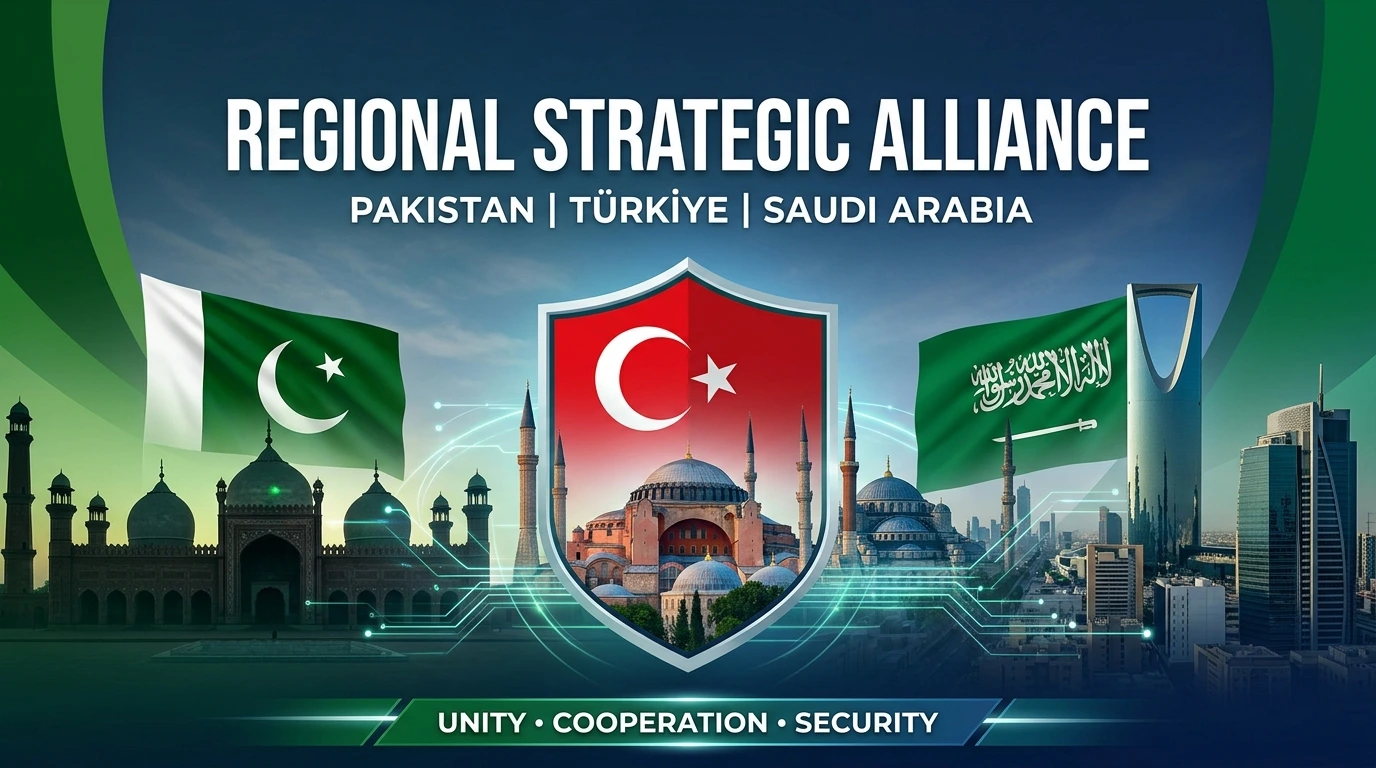
Pakistan, Turkiye and Saudi Arabia have agreed to move toward the rapid deployment of military forces and capabilities in Saudi Arabia under the Makkah Joint Defence Agreement, marking a significant step in putting the newly established defence alliance into practical operation.
The decision was announced after an emergency meeting of the Strategic Political and Defence Committee (SPDC) of the Makkah Defence Alliance in Riyadh on October 5. The meeting focused on the latest security developments and threats facing Saudi Arabia.
According to Pakistan’s Foreign Office, the three countries agreed to immediately implement their collective defence commitments and take the necessary measures to provide agreed military forces and capabilities. The arrangements are intended to improve military readiness, integration and the alliance’s ability to respond to threats.
The agreement comes amid escalating fighting involving Yemen’s Houthi movement and Saudi-backed forces. The three countries strongly condemned attacks targeting Saudi Arabia, including attempts to target the holy cities of Makkah and Madina, as well as attacks on civilian and economic facilities.
Pakistan and Turkiye also praised the Saudi armed forces for their readiness and efforts to protect the kingdom’s security and territorial integrity.
Pakistan’s Defence Minister Khawaja Asif said Pakistani and Turkish forces are currently playing supportive roles, while Saudi forces remain involved in combat operations. He also indicated that Pakistan has been involved in reconnaissance activities.
The Makkah defence agreement was signed on August 7, 2026, with the aim of strengthening collective deterrence among Pakistan, Saudi Arabia and Turkiye. Under the agreement, an attack against one member is treated as an attack against all three.
The latest meeting represents an important transition from political commitments to practical military coordination. The alliance also approved the appointment of Pakistan’s Lieutenant General (Retd) Nauman Mahmood as its first secretary general for a three-year term.
The three countries said the security of each member is an integral part of the collective security of the alliance. They also emphasized that implementing the agreement would strengthen deterrence and demonstrate their shared commitment to protecting sovereignty and territorial integrity.
The rapid deployment arrangement could give the three countries a more coordinated response to emerging threats in and around Saudi Arabia. It also signals closer defence cooperation between Pakistan, Turkiye and Saudi Arabia at a time of growing instability across the Middle East.
For Pakistan, the development further strengthens its strategic and defence relationship with Saudi Arabia while expanding military cooperation with Turkiye. For Saudi Arabia, the agreement provides an additional regional security framework, while Turkiye gains a larger role in a developing collective defence arrangement.
The effectiveness of the Makkah pact will now depend on how quickly the agreed military structures and deployment mechanisms can be implemented.
The latest decision therefore marks a major milestone for the Makkah Defence Alliance and could shape regional security cooperation in the months ahead.