Physical Address
Islamabad, Pakistan
Physical Address
Islamabad, Pakistan

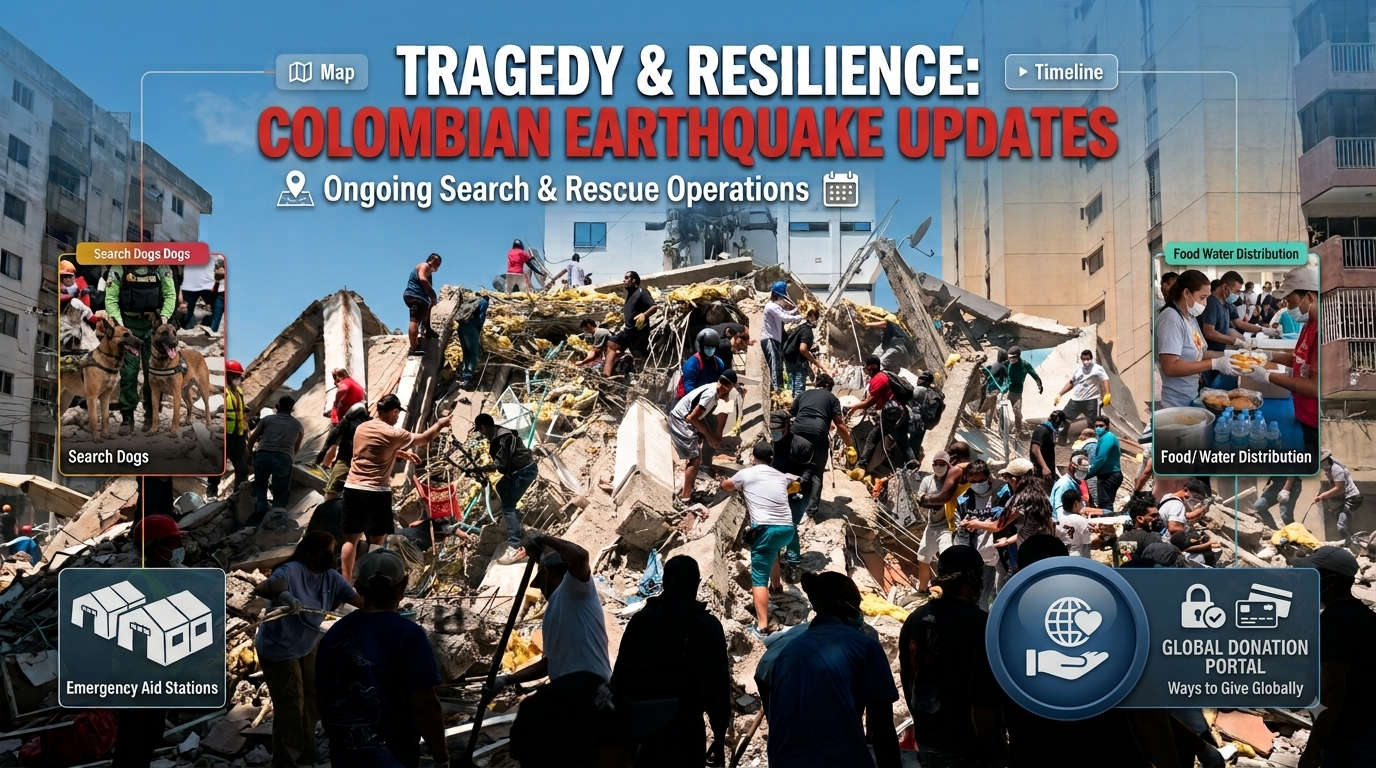
A powerful 7.4-magnitude earthquake struck western Colombia on Monday, August 10, 2026, causing widespread destruction across several cities and leaving a growing number of people dead or injured. The earthquake was centered in the Chocó department, while strong shaking was felt across a large part of Colombia, including major cities such as Cali, Pereira, Manizales and Bogotá.
The disaster has triggered a major emergency response, with rescue workers searching damaged buildings for survivors and authorities assessing the scale of destruction.
The U.S. Geological Survey reported the earthquake as magnitude 7.4, with the event occurring at considerable depth beneath western Colombia.
The earthquake was centered in Colombia’s Chocó region, but its effects extended far beyond the immediate epicentral area.
Strong shaking was reported in Cali, Pereira, Manizales and Bogotá, while tremors were also felt in neighboring countries and across a wide area of northern South America.
The location of the epicenter is particularly important because Chocó is one of Colombia’s more vulnerable regions, with communities that can face challenges accessing emergency services and infrastructure.
The earthquake caused extensive structural damage.
In Pereira, dozens of buildings reportedly collapsed, while Cali also suffered structural damage. Several homes and other buildings were damaged in communities across western Colombia.
Photographs from the aftermath show collapsed walls, piles of concrete and bricks, damaged vehicles and rescue personnel working around unstable structures.
Authorities have urged residents to remain cautious around damaged buildings because weakened structures can collapse during or after additional seismic activity.Rescue Operations Underway
Emergency teams have been deployed across affected communities.
Firefighters, police officers, medical workers and rescue specialists have been searching damaged structures for people who may still be trapped beneath rubble.
The humanitarian situation is particularly concerning in areas where homes have been destroyed or severely damaged. Thousands of residents have reportedly been displaced and require shelter and other emergency assistance.
Reports on August 11 also indicated that more than 2,700 people had been reported missing, although missing-person figures can change rapidly as communication is restored and families are reunited.
The number of casualties has increased rapidly as rescue teams reach more affected locations.
Initial reports put the death toll at dozens of people, but later updates raised the figure to at least 111 and subsequently around 132, with more than 570 people injured according to reports published on August 11.
Because rescue operations are still continuing, the casualty figure could change further.
Although the earthquake occurred in western Colombia, reports so far have focused primarily on land-based destruction rather than a major tsunami disaster.
The earthquake’s relatively deep location is also an important factor when scientists assess how seismic energy was distributed across the region.
Colombian authorities have activated emergency measures and deployed additional personnel to affected areas.
The government has been coordinating rescue, security and humanitarian assistance while local authorities assess damaged buildings and infrastructure.
The emergency response is also focused on helping people who have lost their homes and ensuring that damaged structures are not re-entered before safety assessments are completed.
Colombia lies in a highly active geological region where several tectonic plates interact.
The country’s location along the northern Andes and near the boundary involving the Nazca, South American and Caribbean plates makes earthquakes a recurring natural hazard.
Western Colombia in particular has experienced significant earthquakes throughout history. The recent 7.4-magnitude event demonstrates why earthquake-resistant construction, emergency planning and public awareness remain important.
Beyond the immediate loss of life, the earthquake is creating a second wave of challenges.
Thousands of people may need:
Humanitarian organizations have begun assessing needs and preparing assistance for affected communities.
People in affected areas are being advised to remain alert for aftershocks and avoid entering visibly damaged buildings.
General earthquake safety measures include:
The August 10 earthquake has become one of Colombia’s major recent natural disasters, with deaths, injuries, building collapses and widespread displacement reported across western parts of the country.
The immediate priority remains finding survivors, treating the injured and providing shelter to displaced families. Once rescue operations are completed, authorities will face the much longer task of rebuilding homes, infrastructure and communities.
As assessments continue, the full impact of the 7.4-magnitude Colombia earthquake is likely to become clearer over the coming days.