Physical Address
Islamabad, Pakistan
Physical Address
Islamabad, Pakistan

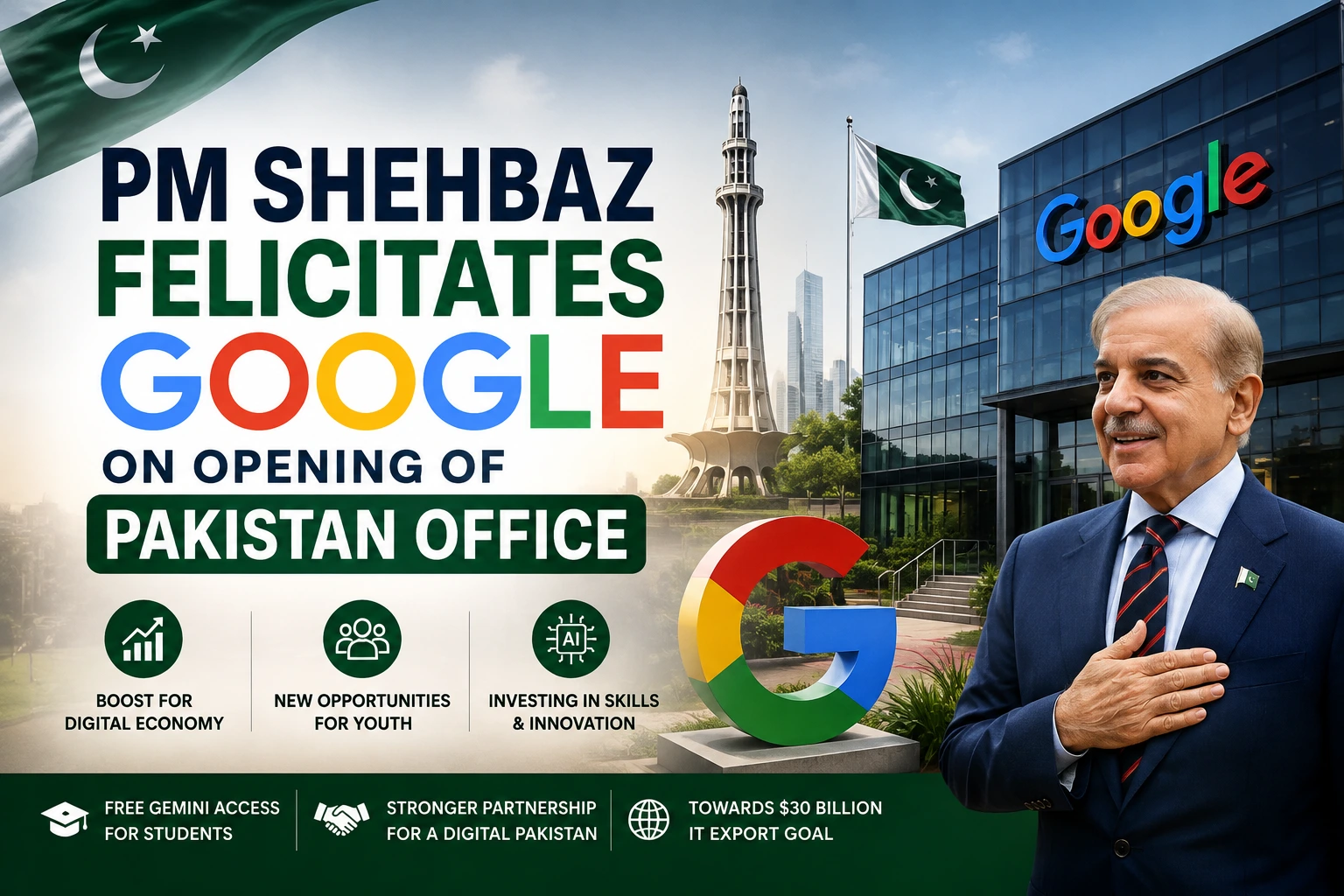
Pakistan has taken another important step toward strengthening its position in the global technology and digital economy after Prime Minister Muhammad Shehbaz Sharif welcomed the opening of Google’s office in Pakistan.
On Tuesday, August 18, Prime Minister Shehbaz Sharif unveiled the foundation plaque of Google’s Pakistan office and described the development as a significant milestone in the country’s digital transformation journey. He also felicitated the Google team and Pakistani officials involved in bringing the company’s local presence to Pakistan.
Addressing a Google delegation at the Prime Minister’s Office, Shehbaz Sharif said Google is a globally recognized name and emphasized that there is considerable potential for a strong partnership between Pakistan and the technology giant.
The prime minister noted that Google’s arrival comes at a particularly important time, as Pakistan is working to expand digital governance, technology services and its IT sector.
He also highlighted Pakistan’s large young population, saying the country’s youth could play an important role in transforming the national economy through technology, skills and digital opportunities.
Google Vice President Wilson L. White described his first visit to Pakistan as an honour and called the establishment of the local office a major milestone.
According to the briefing, Google has been investing in and working with Pakistan for more than a decade. White said the company’s activities over the past ten years had contributed to more than Rs3.9 trillion in economic activity for Pakistani businesses and households while supporting more than 960,000 jobs.
The Google executive also said the company’s goals are aligned with Prime Minister Shehbaz Sharif’s ambition to turn Pakistan into a US$30 billion IT export hub.
Google outlined three major areas through which it intends to support Pakistan’s IT and digital ambitions:
Google emphasized the importance of developing Pakistan’s human capital. The company said it has already helped upskill more than one million Pakistanis through its career certificate programmes and collaborations involving schools and teachers.
For Pakistan, digital skills could become increasingly important as freelancing, software development, artificial intelligence, cloud computing and other technology-based industries continue to expand.
Google also indicated that its commitment would include investment in manufacturing and infrastructure related to export hardware.
This could potentially create new opportunities for Pakistan to participate more deeply in global technology supply chains.
The company also plans to work with local businesses as part of its broader commitment to Pakistan’s digital economy.
For startups, small businesses and technology companies, greater engagement with international technology firms could create opportunities for training, digital tools and access to global markets.
One of the biggest announcements from the meeting was that Google Gemini subscriptions will be made available free of charge to all students in Pakistan for one year.
Google Vice President Wilson L. White said a formal announcement regarding the programme would follow later in the week.
The initiative could be particularly significant for students interested in artificial intelligence, programming, research and education. Access to advanced AI tools could help Pakistani students experiment with new technologies and develop skills relevant to the future digital economy.
The opening of a Google office represents more than the physical establishment of a corporate presence. It comes as Pakistan is attempting to increase IT exports, improve digital governance and attract international technology investment.
The government has increasingly emphasized digital transformation. Earlier in 2026, Prime Minister Shehbaz Sharif launched an AI-based Prime Minister Office System designed to replace traditional paper-based processes with digital workflows.
Google’s presence could therefore complement Pakistan’s broader push toward digitalization.
Pakistan has a large and increasingly technology-focused young population. With appropriate education and training, this workforce could become an important contributor to the global digital economy.
Google’s skills programmes, AI education initiatives and engagement with local businesses could help expand opportunities in areas such as:
However, turning these opportunities into long-term economic benefits will require continued investment in education, internet infrastructure, digital payments and a business environment that encourages technology companies and startups.
Pakistan has been seeking to significantly increase its IT and technology exports. The government’s stated ambition of reaching US$30 billion in IT exports is an indication of how important the sector has become to the country’s economic strategy.
Google’s commitment to investing in people, infrastructure and local businesses could support this ambition, although achieving such a target will depend on broader reforms and sustained private-sector investment.
Prime Minister Shehbaz Sharif described the occasion as a wonderful day for the partnership between Pakistan and Google and called it a stepping stone toward a longer journey of collaboration.
The Google delegation’s visit and the establishment of a local office could open the door to deeper cooperation in artificial intelligence, education, cloud technology, digital businesses and skills development.
For Pakistan, the challenge now is to convert this milestone into tangible benefits for students, entrepreneurs, technology professionals and the wider economy.
Google’s Pakistan office marks an important development in the country’s growing digital economy. Prime Minister Shehbaz Sharif has welcomed the company’s arrival as a milestone for Pakistan’s digital transformation, while Google has highlighted its long-term commitment to the Pakistani market.
The promise of free Gemini access for students for one year, continued skills development and investment in people and local businesses could make the development particularly significant for Pakistan’s young population.
The opening of the office is only the beginning. The real measure of its success will be how effectively Pakistan can turn this new partnership into jobs, skills, investment, innovation and stronger IT exports in the years ahead.