Physical Address
Islamabad, Pakistan
Physical Address
Islamabad, Pakistan

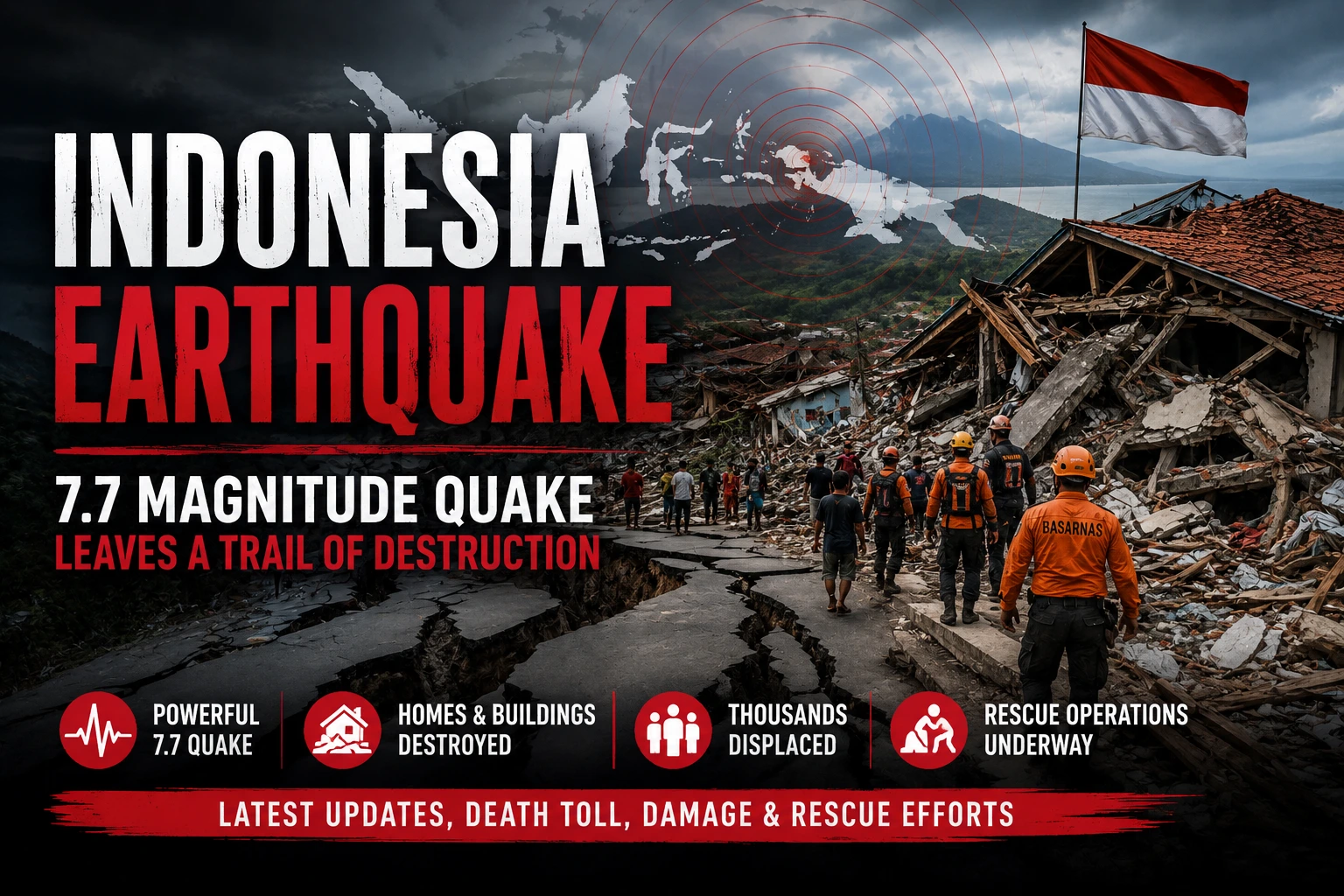
A powerful magnitude 7.7 earthquake struck eastern Indonesia on August 15, 2026, leaving communities on Flores Island and surrounding areas facing a major humanitarian emergency. The earthquake caused deaths, injuries, collapsed buildings, landslides and widespread disruption as rescue teams continued searching affected communities.
As of August 17, reports put the death toll at 68 people, with more than 200 injured. Thousands of residents have been forced to leave their homes and are staying in temporary shelters because of damaged buildings and continuing aftershocks.
The earthquake struck in East Nusa Tenggara province, particularly affecting communities on and around Flores Island.
The shallow earthquake caused severe shaking and damage across several areas. Landslides blocked roads, while damaged infrastructure made it difficult for emergency workers to reach some communities.
Indonesia is particularly vulnerable to earthquakes because it sits along the Pacific Ring of Fire, where several tectonic plates interact.
The number of casualties increased as rescue workers reached communities that had initially been difficult to access.
By Monday, August 17, authorities reported 68 deaths and more than 200 injuries. Thousands of people remained displaced, with many sleeping outdoors or in makeshift shelters because they were afraid damaged buildings could collapse during aftershocks.
The disaster has created an urgent need for food, clean water, medical assistance and temporary accommodation.
The earthquake caused extensive structural damage.
More than 1,300 homes were reported damaged, while hundreds of homes on Flores were destroyed. Schools, health facilities, government buildings and religious sites were also affected.
In some locations, roads were blocked by landslides and debris, making transportation of emergency supplies extremely difficult.
One of the biggest challenges facing survivors is the continuing series of aftershocks.
More than 1,500 aftershocks had been recorded by August 17, according to reports, leaving many residents afraid to return to damaged homes.
A further earthquake of around magnitude 5.9 was reported in the Flores region on Monday, adding to concerns among people already affected by the larger disaster.
Search-and-rescue teams are continuing to inspect collapsed buildings and isolated communities.
Military personnel, police officers, emergency workers and volunteers have been involved in the response. However, blocked roads and landslides have slowed operations in some areas.
Authorities are also working to deliver food, medicine, drinking water and emergency shelter materials to communities that have been cut off.
Many survivors have chosen to remain outside rather than sleep inside damaged houses.
Temporary camps have been established in several locations, while emergency medical facilities are being used where hospitals and other buildings have been damaged. Reports indicate that around 19,000 people were in temporary shelters by August 17.
For many families, the immediate priority is finding relatives, receiving medical care and obtaining basic necessities.
The powerful earthquake also prompted authorities to issue a tsunami warning shortly after the tremor.
The warning was later lifted, although small tsunami waves were recorded in parts of the affected region. The largest reported wave reached about 1.61 metres in Riung village, according to AP.
The tsunami threat added another layer of fear for coastal communities already dealing with severe earthquake damage.
The earthquake struck just before Indonesia’s Independence Day celebrations on August 17.
Instead of focusing entirely on celebrations, many residents in the affected areas spent the national holiday searching for relatives, staying in shelters and waiting for emergency assistance.
President Prabowo Subianto led a moment of silence for victims during the national Independence Day ceremony and called for prayers for people affected by the disaster.
Indonesia is one of the world’s most earthquake-prone countries.
The country lies along the Pacific Ring of Fire, a region known for intense tectonic activity and numerous volcanoes. Several major tectonic plates meet around Indonesia, producing frequent earthquakes.
The country’s history includes some of the world’s most devastating earthquakes and tsunamis, including the catastrophic 2004 Indian Ocean earthquake and tsunami.
The immediate focus remains on search and rescue, medical treatment, food distribution, clean water and temporary shelter.
Authorities must also assess damaged buildings and infrastructure before residents can safely return home.
With aftershocks continuing, emergency teams are expected to remain active across East Nusa Tenggara while officials assess the full scale of the destruction.
The August 2026 Indonesia earthquake has become one of the country’s most serious recent natural disasters. With dozens dead, hundreds injured and thousands displaced, the recovery effort is likely to continue for weeks and possibly months.
The situation remains fluid, and casualty and damage figures may change as rescue teams reach more remote areas.
For now, the priority is helping survivors, locating anyone still missing and providing affected communities with safe shelter, food, water and medical care.