Physical Address
Islamabad, Pakistan
Physical Address
Islamabad, Pakistan

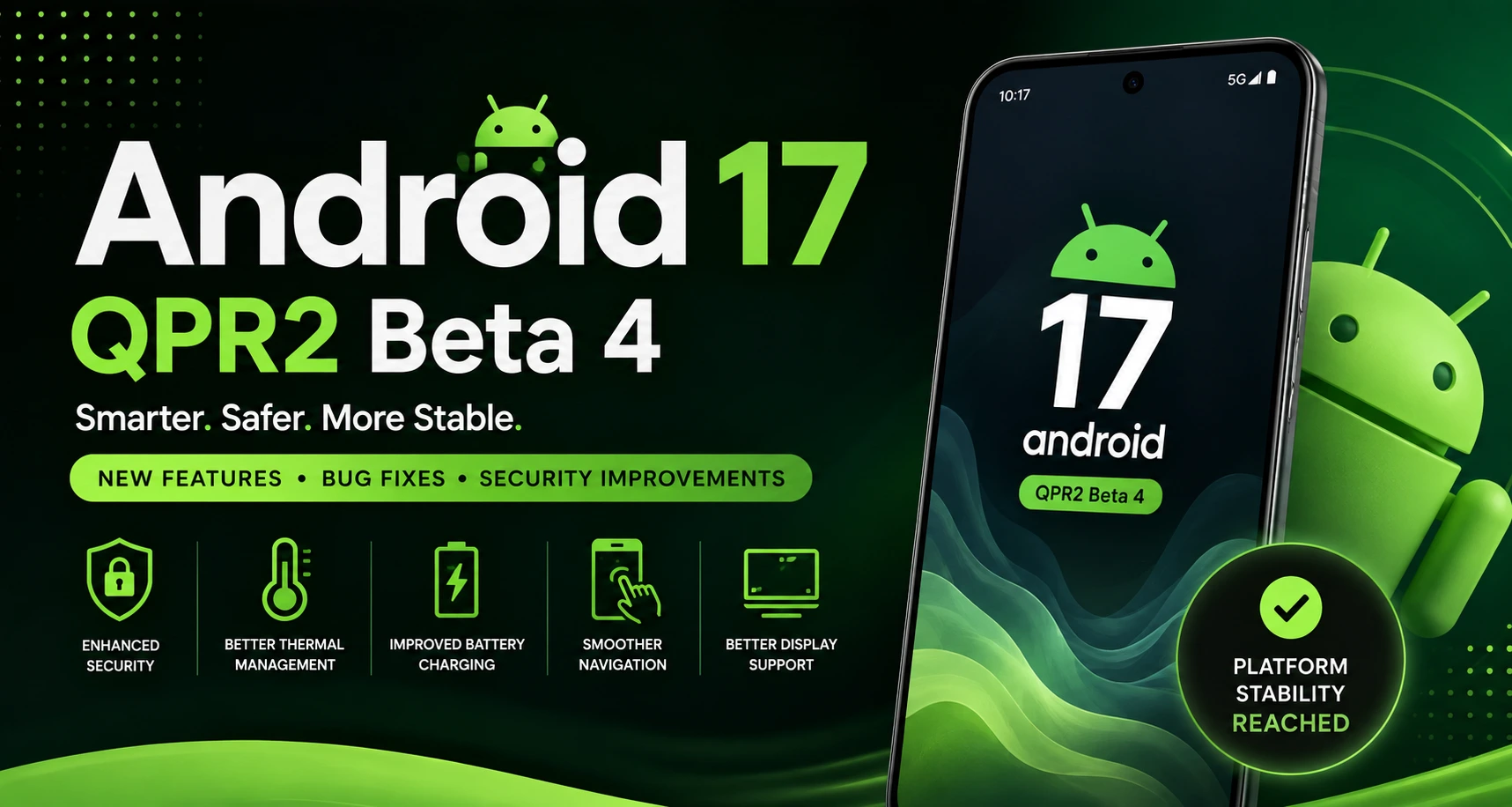
Google has officially released Android 17 QPR2 Beta 4, giving Pixel users and developers another preview of the upcoming quarterly Android update. The new beta arrived on August 28, 2026, roughly two weeks after QPR2 Beta 3.
According to Google, QPR2 Beta 4 continues the Android 17 development cycle with platform fixes, improvements and security changes. The update has also reached Platform Stability, making it an important milestone for developers preparing their applications.
Android 17 QPR2 Beta 4 was released on August 28, 2026.
Google lists the following builds:
The update is aimed primarily at supported Pixel devices and developers who want to test their apps against the upcoming QPR2 platform.
QPR stands for Quarterly Platform Release. Google uses these releases to deliver improvements, fixes and selected platform changes between major Android versions.
Unlike a completely new Android version, QPR updates generally focus on refining the existing experience. Google says Android 17 QPR2 includes a minor SDK release and has no planned behavior changes that would require major compatibility testing.
One of the most notable changes in QPR2 is a new security measure designed to help protect users against call-forwarding scams.
Android 17 QPR2 introduces restrictions around programmatic call-forwarding USSD codes. Apps using the TelephonyManager.sendUssdRequest() API will no longer be able to freely execute certain call-forwarding commands using only the CALL_PHONE permission.
Android can now block unauthorized background attempts and return a USSD_ERROR_NOT_ALLOWED result.
Google is also adding an operating-system confirmation dialog when users manually enter certain call-forwarding codes through the system dialer.
The change is particularly important because scammers can attempt to trick users into enabling call forwarding, potentially redirecting incoming calls away from the victim.
Google has included several important bug fixes in Beta 4.
One of the more significant fixes addresses a thermal-management problem that could cause some devices to overheat and unexpectedly reboot during use.
This should make the beta more reliable for users who experienced instability or unusual heat during previous builds.
Beta 4 also fixes an issue where gesture navigation could become unresponsive when apps were rendered below the display cutout area.
This is particularly relevant for developers testing applications with unusual display configurations.
Google has fixed an issue that prevented screen mirroring to certain external USB-C XR glasses.
The fix could benefit users and developers testing Android’s growing ecosystem of external and immersive displays.
Another fix addresses the 80% battery-limit optimization. Previously, some devices could take an excessive amount of time during the final 2% of charging toward the configured limit.
Beta 4 improves this behavior, potentially making battery protection features more convenient for everyday users.
Google has also resolved a launcher problem where searching for applications in the app drawer could fail to process text input correctly.
This is a smaller change, but it improves one of the most frequently used parts of the Pixel launcher experience.
Android 17 QPR2 Beta 4 is an important milestone because the release has reached Platform Stability.
For developers, this means the platform is becoming much more mature and suitable for final compatibility testing. The focus at this stage is increasingly on fixing bugs and polishing the overall experience rather than introducing major platform changes.
Beta 4 is more focused on stability, security and bug fixes than major new features.
Android 17 itself already introduced several notable changes, including improved multitasking, new screen-recording tools, foldable gaming improvements and expanded security controls.
QPR2 Beta 4 builds on that foundation rather than completely changing the Android interface.
The beta is mainly recommended for:
However, beta software can still contain bugs. Users who depend on their phone for important work may prefer to wait for the stable release.
Beta 3 was released on August 14, 2026, while Beta 4 arrived on August 28.
The latest release focuses heavily on fixing problems discovered in earlier builds. Improvements include thermal stability, gesture navigation, USB-C XR display support, charging behavior and launcher search.
This makes Beta 4 less about dramatic visual changes and more about making Android 17 QPR2 reliable and ready for its eventual stable release.
Android 17 QPR2 Beta 4 is an important refinement update rather than a major redesign. Google has concentrated on fixing stability problems, improving device behavior and strengthening security.
The new call-forwarding protection is particularly interesting because it addresses a real-world fraud technique, while fixes for overheating, unexpected reboots, navigation, charging and external displays should make the beta more dependable.
With QPR2 now at Platform Stability, Android 17 continues to move toward a polished experience for Pixel users and developers.
For users who enjoy testing upcoming Android releases, QPR2 Beta 4 is an interesting update. For everyone else, waiting for the stable release remains the safer choice.