Physical Address
Islamabad, Pakistan
Physical Address
Islamabad, Pakistan

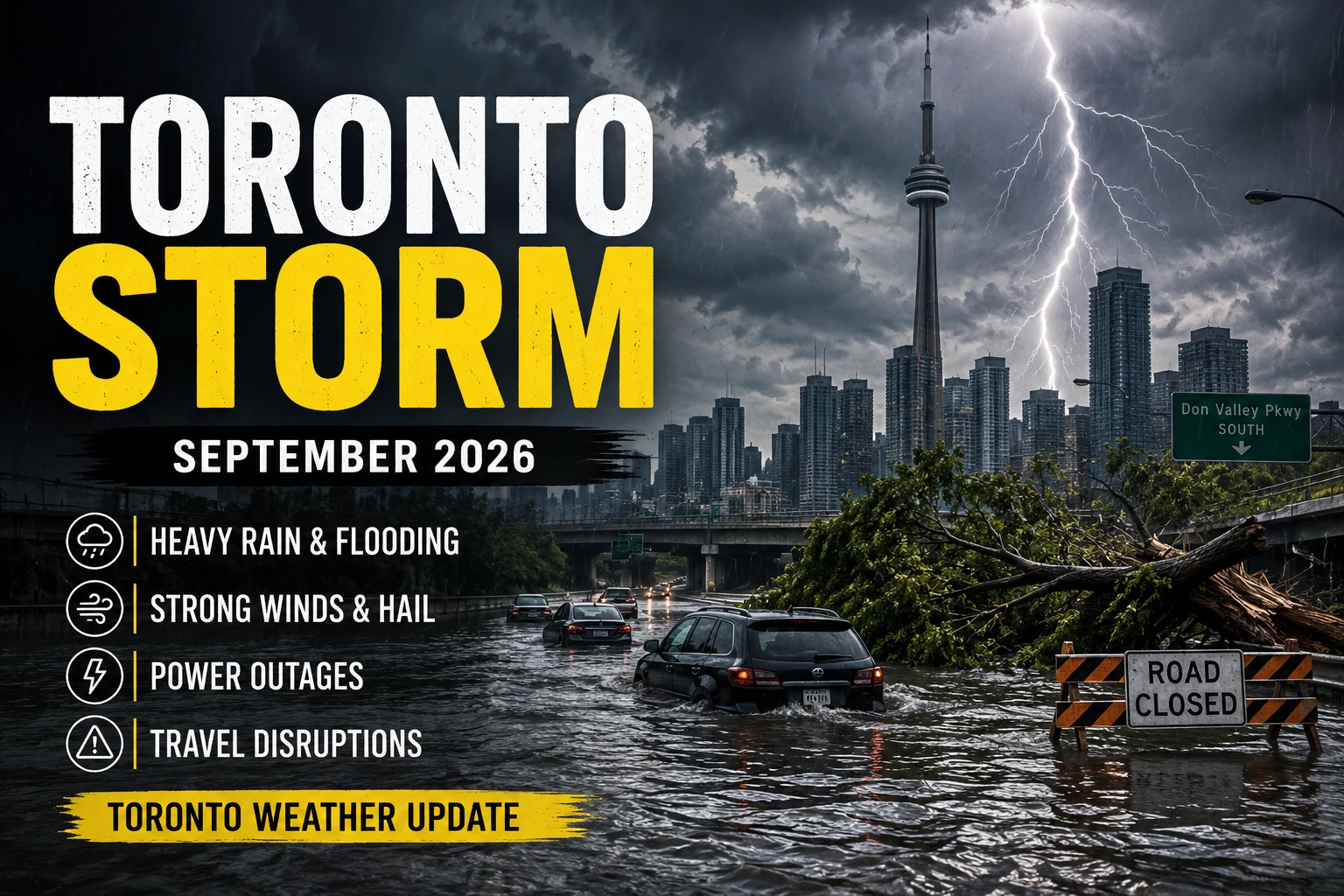
Toronto, September 3, 2026: A powerful and damaging thunderstorm swept through Toronto and parts of the Greater Toronto Area on Wednesday, September 2, bringing torrential rain, destructive winds and large hail. The storm caused widespread flooding, knocked down trees and power lines, disrupted public transportation and left thousands of homes and businesses without electricity.
The storm developed during a period of hot and unstable weather across southern Ontario. Environment Canada warned of dangerous thunderstorms capable of producing destructive wind gusts, large hail and very heavy rainfall.
Officials warned that wind gusts could exceed 110 km/h, while rainfall totals in some locations could reach around 50 millimetres. There was also a risk of tornadoes during the most intense part of the weather system.
The strongest storms moved through Toronto during the afternoon and evening, creating hazardous conditions for motorists, pedestrians and residents.
Heavy rainfall overwhelmed parts of Toronto’s drainage system, resulting in significant street flooding.
The Don Valley Parkway (DVP) was among the major roads affected, with flooding leaving vehicles stranded in some areas. Other roads were also closed or affected as emergency crews responded to flooding and debris.
Toronto officials said crews were working to remove floodwater, clear fallen trees and clean debris from affected roads.
Strong winds brought down trees and utility lines across Toronto and surrounding communities.
Toronto Hydro reported that approximately 45,000 customers were without electricity at one point during the storm. By early Thursday, thousands remained without power, while Hydro One reported tens of thousands of additional customers affected across Ontario.
Utility crews have been working to assess damage and restore electricity to affected neighborhoods.
The storm also caused major disruptions to transportation.
Flooding and debris affected parts of Toronto’s public transit network, while road closures created additional traffic problems. Some subway services were temporarily suspended because of flooding and storm-related debris.
Authorities advised residents to allow extra travel time and avoid flooded roads whenever possible.
The severe weather also affected air travel in the Toronto area, with flights at Toronto Pearson International Airport facing cancellations and disruptions as the storm moved through the region.
Passengers were advised to check directly with airlines for updated flight information before travelling to the airport.
The combination of strong winds, hail and heavy rain caused damage to trees, buildings and infrastructure.
Emergency crews received numerous reports of fallen trees, downed wires and flooding. The City of Toronto said it received around 1,000 service requests related to the storm and deployed crews to areas requiring immediate attention.
Dramatic scenes were also reported across the city as residents and workers dealt with dangerous wind conditions.
With the worst of the storm moving away, Toronto has shifted its focus toward cleanup and recovery.
City crews are clearing fallen trees, debris and sediment from roads while continuing to respond to flooding-related calls. Officials are also warning residents to remain cautious because damaged trees, power lines and flooded areas can remain dangerous even after the storm has passed.
Residents affected by the storm are being encouraged to:
The September 2026 Toronto storm has left a significant impact across the city and surrounding areas, with flooding, power outages, fallen trees, road closures and transportation disruptions reported following the severe weather.
Although cleanup and recovery efforts are underway, residents should continue exercising caution while crews work to restore affected infrastructure and services. The event is another reminder of how quickly severe thunderstorms can create dangerous conditions in a major urban area.
This article is based on reports available on September 3, 2026, and conditions may continue to change as cleanup and recovery operations progress.