Physical Address
Islamabad, Pakistan
Physical Address
Islamabad, Pakistan

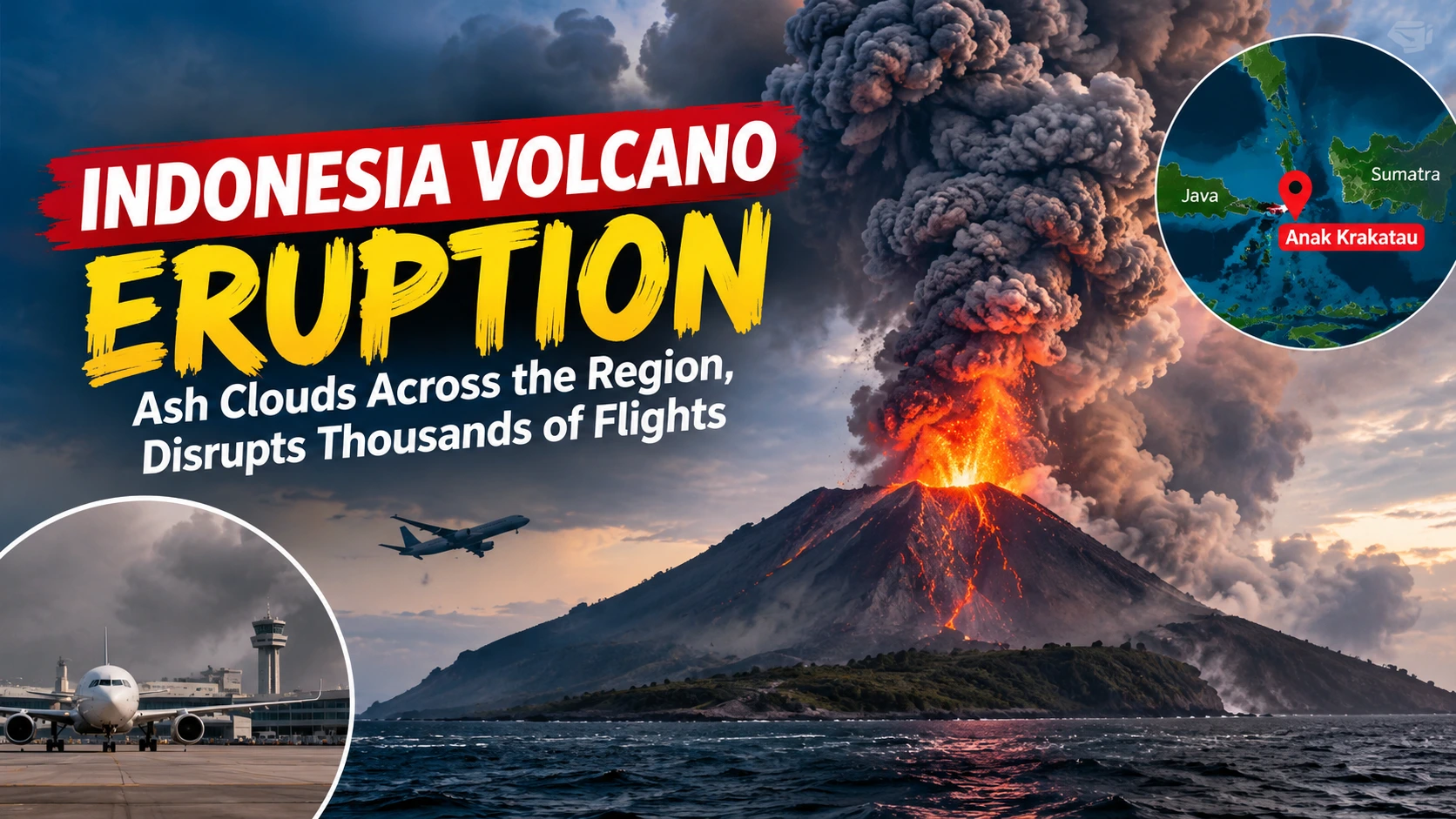
Indonesia is facing renewed volcanic activity as Mount Anak Krakatau erupts in the Sunda Strait between the islands of Java and Sumatra. The eruption has sent volcanic ash into the atmosphere, disrupted air travel and prompted authorities to closely monitor the volcano.
The latest major eruptive activity began on September 4–5, 2026, with reports of loud booming and rumbling sounds as well as lava-fountaining activity. Authorities have continued monitoring the volcano around the clock because its activity can change quickly.
On September 8, Indonesia’s Geological Agency said Anak Krakatau had returned to a Strombolian-style eruptive phase, characterized by shorter eruptions and lower seismic amplitudes. Eight smaller eruptions lasting around 10–15 seconds were reported that day.
One of the biggest effects of the eruption has been on aviation. Volcanic ash spread across parts of western Indonesia, forcing the temporary closure of several airports.
At the height of the disruption, eight airports were affected, including Jakarta’s Soekarno-Hatta International Airport. More than 340,000 travellers and approximately 2,900 flights were affected before several airports began reopening.
Airlines and aviation authorities have been particularly cautious because volcanic ash can damage aircraft engines and other critical systems.
Indonesia’s meteorological agency reported volcanic ash at different altitudes, with winds carrying ash toward areas including Banten, western Java, Lampung and parts of the surrounding waters. Authorities have continued issuing aviation warnings as wind direction and ash movement change.
Residents in affected areas have also been advised to take precautions against ash exposure, while some schools moved toward remote learning during periods of heavy ashfall.
Anak Krakatau is particularly well known because its 2018 eruption caused a devastating tsunami after part of the volcanic island collapsed into the sea.
However, officials have emphasized that the current situation is different. The Geological Agency has said the present volcanic structure is not considered capable of collapsing on the same scale as the event that caused the 2018 tsunami.
Authorities nevertheless continue to monitor the volcano closely because volcanic conditions can change rapidly.
By September 8, Jakarta’s main airport and four other airports had reopened after ash was cleared from runways and other operational areas. Officials are still conducting safety checks and inspecting aircraft before allowing normal flight schedules to fully resume.
The reopening provides relief to thousands of stranded passengers, although airlines may need additional time to clear the backlog of cancelled and delayed flights.
Indonesia sits along the Pacific Ring of Fire, where several tectonic plates interact. This geological setting makes the country one of the world’s most volcanically active regions, with more than 100 active volcanoes.
Anak Krakatau itself emerged from the remains of the famous Krakatoa volcanic system, making it one of Indonesia’s most closely watched volcanoes.
For now, authorities are maintaining close surveillance of Anak Krakatau’s activity. The latest signs suggest that the eruption has become shorter and less intense than the major phase earlier in the event, but officials continue to warn that volcanic activity can increase again.
The situation also demonstrates how a volcanic eruption can affect much more than the area surrounding a volcano—from aviation and tourism to schools, fishing and everyday life.
Indonesia’s latest Anak Krakatau eruption is a reminder of the country’s powerful volcanic environment, while authorities continue working to protect residents and keep air travel safe