Physical Address
Islamabad, Pakistan
Physical Address
Islamabad, Pakistan

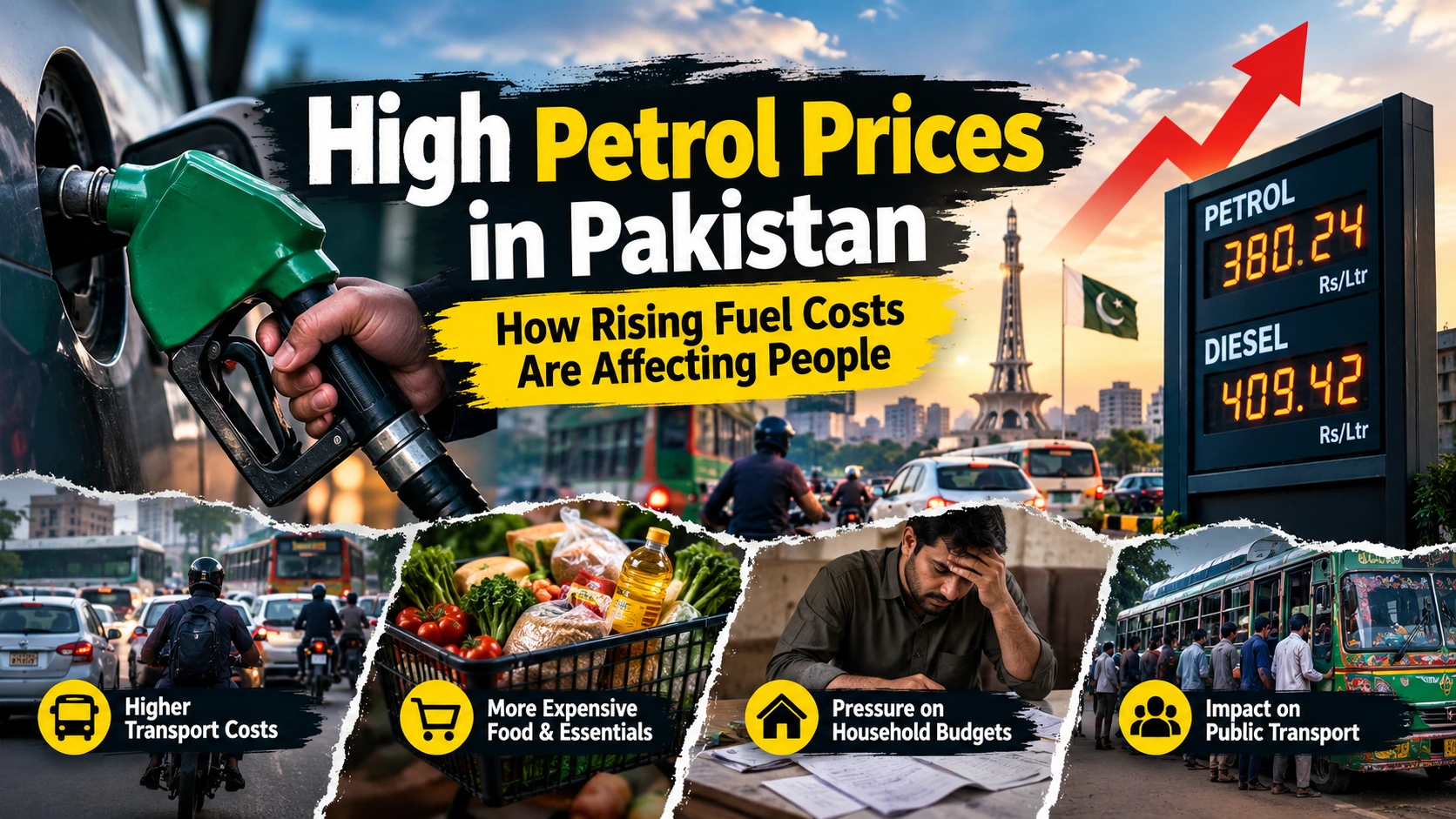
Petrol prices have become a major concern for people across Pakistan as repeated increases in petroleum prices are putting additional pressure on household budgets. The latest increase has pushed petrol to Rs380.24 per litre, while high-speed diesel has reached Rs409.42 per litre.
The continued rise comes at a difficult time for consumers who are already dealing with higher food, transport and utility expenses. The government has also proposed a Rs75 billion fuel relief scheme aimed at reducing the impact on vulnerable consumers, while a petrol subsidy for motorcycle and small-car owners has been discussed.
One of the most immediate effects of expensive petrol and diesel is the increase in transportation costs. Daily commuters who use motorcycles, cars, buses and vans have to spend more simply to travel to work, schools and markets.
Goods transport is also becoming more expensive. Transporters have announced additional fare increases following the latest fuel hikes, meaning businesses face higher delivery and transportation costs.
For ordinary families, this can mean spending a larger portion of their monthly income on commuting.
Higher fuel prices do not only affect people who own vehicles. Almost every product sold in the market has some transportation cost attached to it.
Farmers need fuel for machinery and transportation, while wholesalers and retailers depend on trucks and other vehicles to move goods. When diesel and petrol prices rise, these additional expenses can eventually be passed on to consumers.
Pakistan’s inflation rate already increased to 11.1% in August, with higher food and energy costs among the factors contributing to the rise.
Families are now being forced to reconsider their monthly spending. Money that previously went toward savings, education, healthcare or other necessities may instead be used for fuel and transportation.
For middle- and lower-income households, even a small increase in the price of petrol can make a significant difference when fuel is purchased regularly.
People who do not own cars or motorcycles are not completely protected from fuel price increases. Public transport operators face higher fuel and operating costs, which can lead to higher fares.
Reports from Rawalpindi indicate that transport fares and freight charges have increased following recent fuel price increases, adding further pressure on commuters and businesses.
Pakistan’s fuel prices are heavily influenced by international crude oil prices, exchange-rate movements and domestic taxes and levies. Global oil markets have recently faced major volatility because of geopolitical tensions in the Middle East.
Brent crude recently moved above $100 per barrel, increasing pressure on countries that rely heavily on imported petroleum.
Pakistan has also moved toward more frequent fuel-price adjustments during periods of international market volatility, making consumers more sensitive to sudden changes at petrol stations.
The impact of high petrol prices could continue to spread through the economy if fuel costs remain elevated. Transportation, food distribution, manufacturing and other fuel-dependent sectors may face additional expenses.
The government’s proposed relief measures could provide some support, particularly for motorcycle and small-car users, but questions remain about whether such measures will be enough to offset the wider increase in living costs.
The rise in petrol prices is more than just a problem at the fuel station. It affects commuting, public transport, food prices, business costs and household budgets across Pakistan.
With petrol now at Rs380.24 per litre, consumers are facing another challenge in managing their everyday expenses. Unless global oil prices stabilize and domestic relief measures provide meaningful support, expensive fuel is likely to remain a major concern for Pakistani families and businesses.