Physical Address
Islamabad, Pakistan
Physical Address
Islamabad, Pakistan

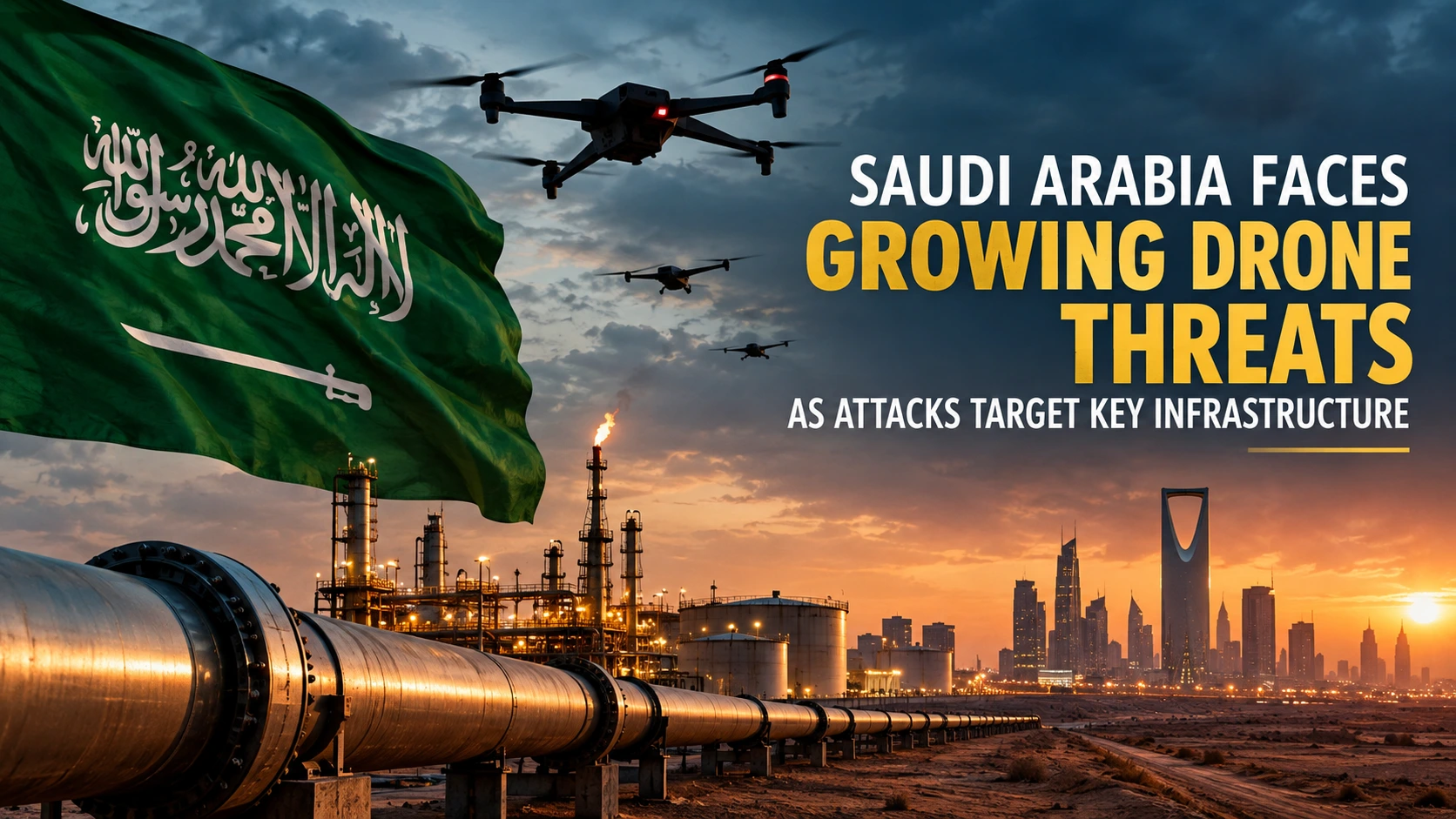
Saudi Arabia is facing a renewed security challenge as drone attacks and missile strikes intensify across parts of the kingdom. The latest incidents have raised concerns not only about civilian safety but also about the security of Saudi Arabia’s vital energy infrastructure and the wider Middle East region.
On September 11, Saudi Arabia said several drones launched from Iraqi territory targeted its strategic East-West oil pipeline in the Riyadh and Madinah regions. The attacks caused injuries and material damage, forcing the temporary shutdown of the pipeline. Saudi authorities said they were holding off on retaliation after a request from the Iraqi government to investigate and prevent further attacks.
The East-West Pipeline is particularly important because it allows Saudi Arabia to move crude oil from the Persian Gulf toward the Red Sea, providing an alternative route when shipping through the Strait of Hormuz becomes difficult.
The 1,200-kilometre pipeline has become even more strategically important amid the current regional tensions. Its temporary closure has contributed to concerns about global oil supplies and prices.
At the same time, Yemen’s Houthi movement has intensified attacks involving drones and missiles against Saudi targets. Saudi officials have reported attacks affecting areas including Jazan, Abha and Khamis Mushait.
Saudi Civil Defence has issued emergency alerts in several areas and urged residents to follow official safety instructions, avoid open spaces and stay away from windows, rooftops and balconies during alerts.
On September 15, Saudi authorities also announced that the immediate danger had passed in several cities, including Jeddah, Abha, Jazan, AlUla, Taif and Yanbu, although the wider security situation remains tense.
The drone attacks are happening at a particularly sensitive time for global energy markets. Saudi Arabia is one of the world’s most important oil producers, meaning prolonged disruption to its infrastructure could have consequences far beyond the Middle East.
Analysts have warned that continued attacks on pipelines, ports and shipping routes could push oil prices higher and increase transportation and fuel costs worldwide.
Saudi Arabia now faces pressure on several fronts, including attacks linked to the conflict in Yemen, drone strikes reportedly originating from Iraqi territory and growing instability around important Red Sea shipping routes.
The Saudi government has condemned the attacks and emphasized its right to protect its territory, citizens and critical infrastructure. Meanwhile, Iraq has begun investigations into the attacks launched from its territory, while the Gulf Cooperation Council has called the pipeline strike a serious escalation.
The latest drone attacks highlight how vulnerable critical energy infrastructure can be during periods of regional conflict. While Saudi Arabia has so far shown restraint in responding to the strikes linked to Iraqi territory, continued attacks could increase pressure on Riyadh to take stronger security measures.
For Saudi residents, businesses and global energy markets, the situation remains closely watched as authorities work to prevent further attacks and protect vital infrastructure.